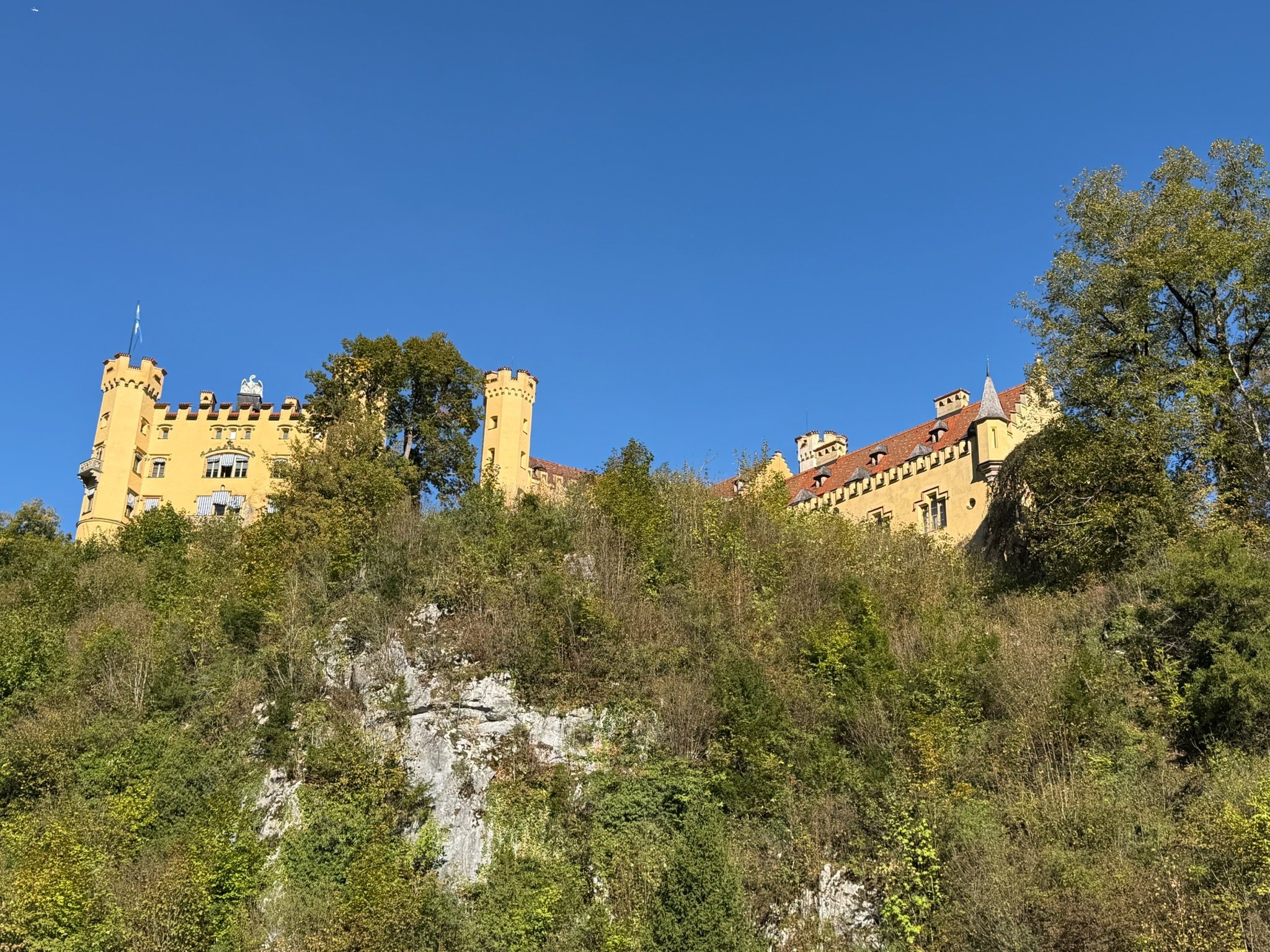
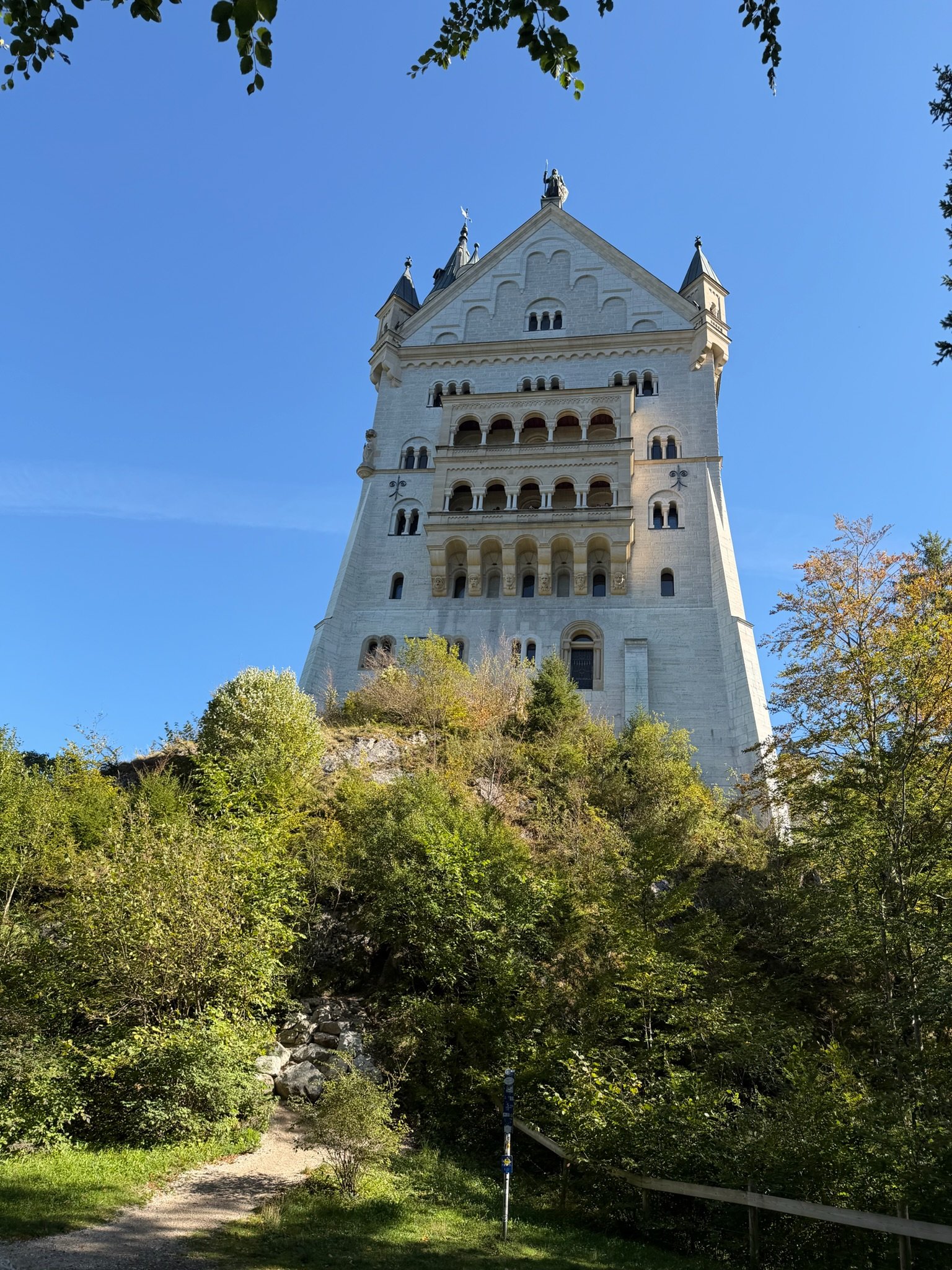
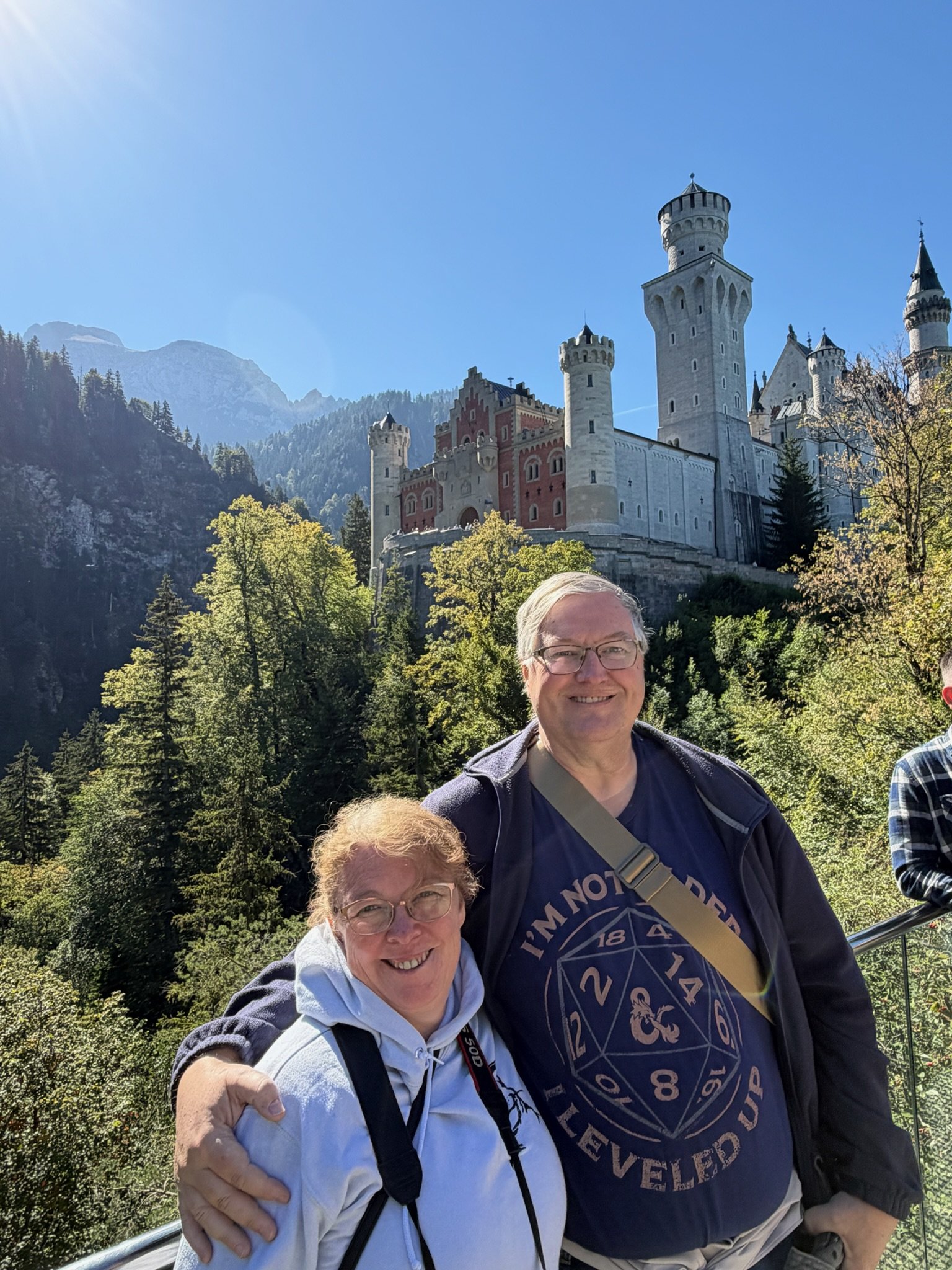
The first destination was Neuschwanstein Castle, set dramatically above the valley near Schwangau. As we approached, we could see people flying through the air under what looked like parachute canopies, possibly paragliders or powered paragliders. The castle itself is one of those buildings you've seen so often in photographs—summer green, autumn color, winter snow—that it almost doesn't seem real when you're finally looking at it.
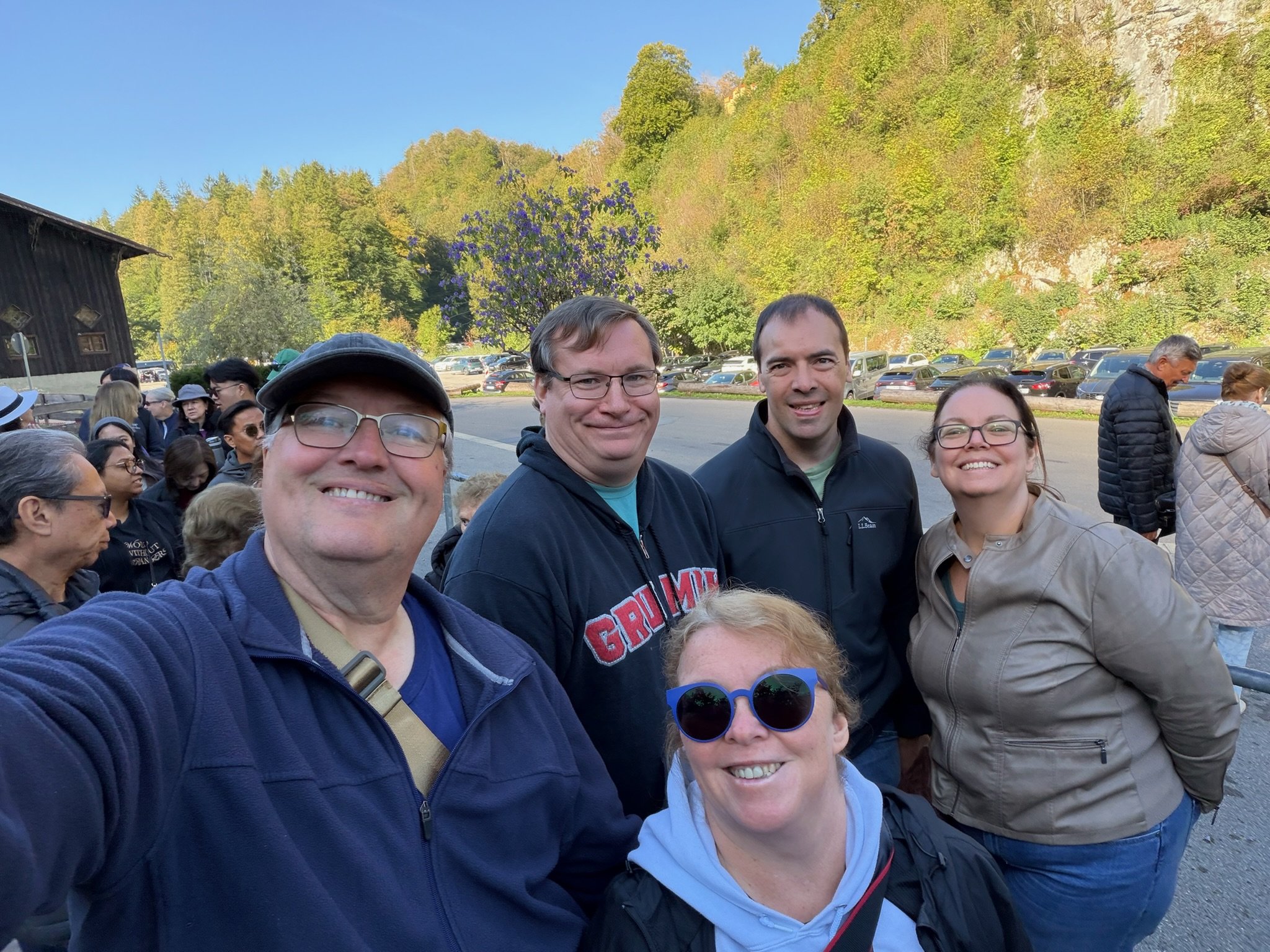
From the bus parking area, there were several ways to get up toward Neuschwanstein Castle. You could walk, take a shuttle bus part of the way, or ride in one of the horse-drawn carriages that carried visitors up the hill. The carriages looked as though they seated six to eight people, although some seemed pretty crowded. Our guide actually discouraged us from taking them, partly because of the smell. Horses sweat, particularly when they're working their way uphill, and, well, horses also do what horses do. According to our guide, some passengers had complained that the odor lingered on their clothes afterward. Teresa and I have enjoyed horse-drawn carriage rides before, and there's something lovely about a quiet, cozy ride with just a couple of people. But watching two horses pulling a carriage packed with tourists up that hill didn't look quite as romantic. We saw several making the climb as we walked back down, and while I understand that horses are capable of pulling substantial loads, it was clearly hard work. Personally, I'd recommend walking if you have the time and ability, or taking the shuttle if you'd rather save your legs.
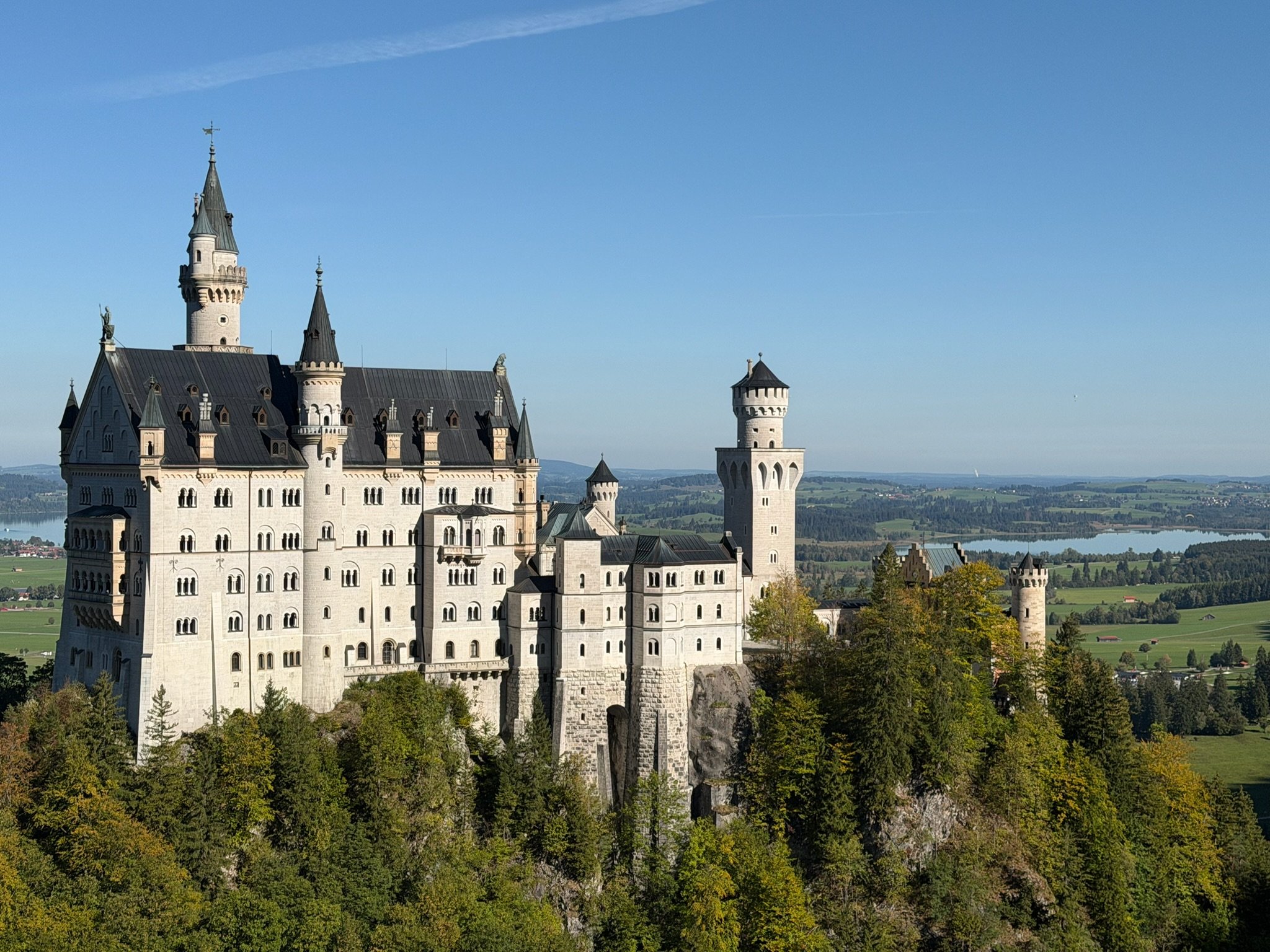
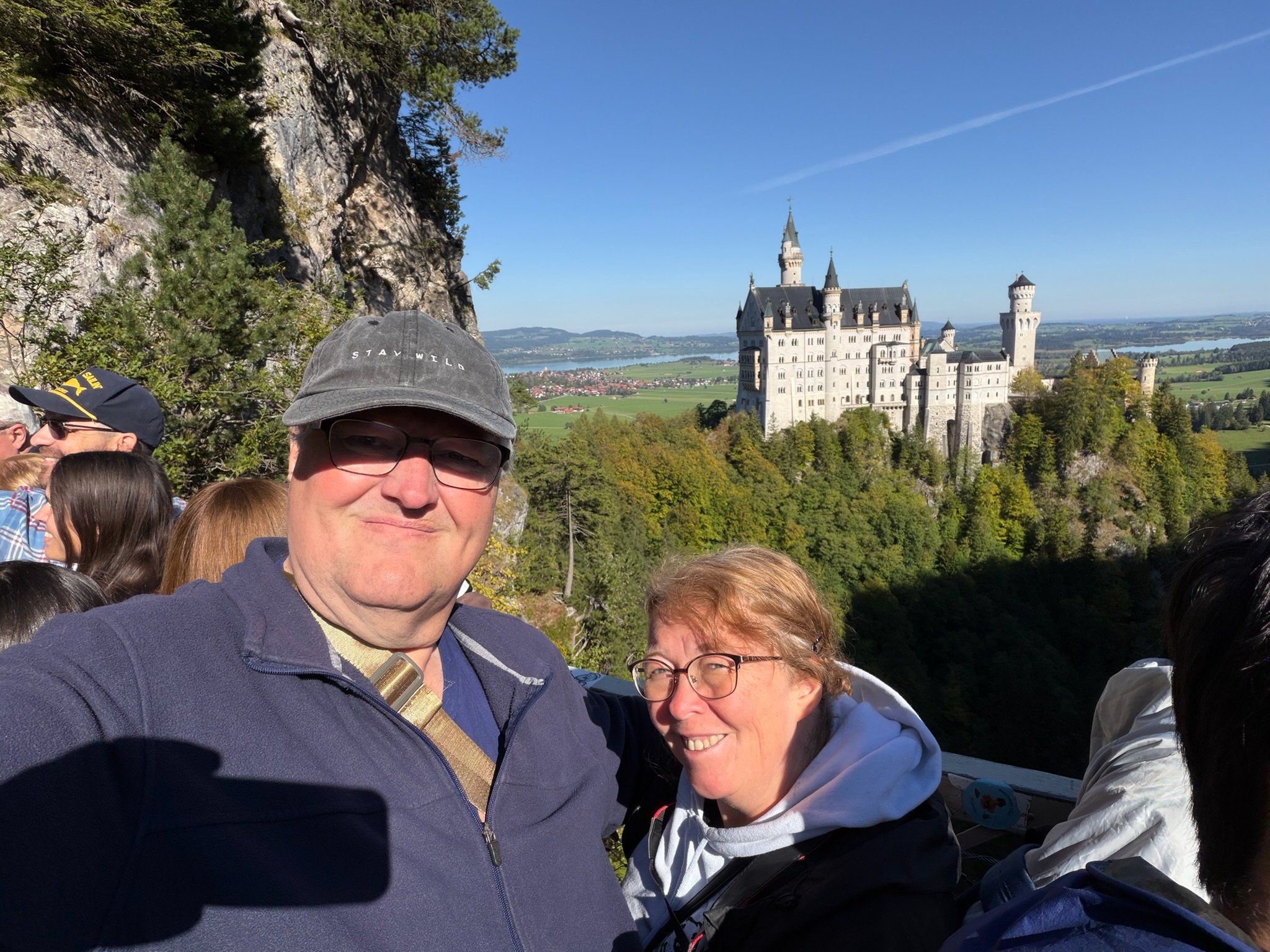
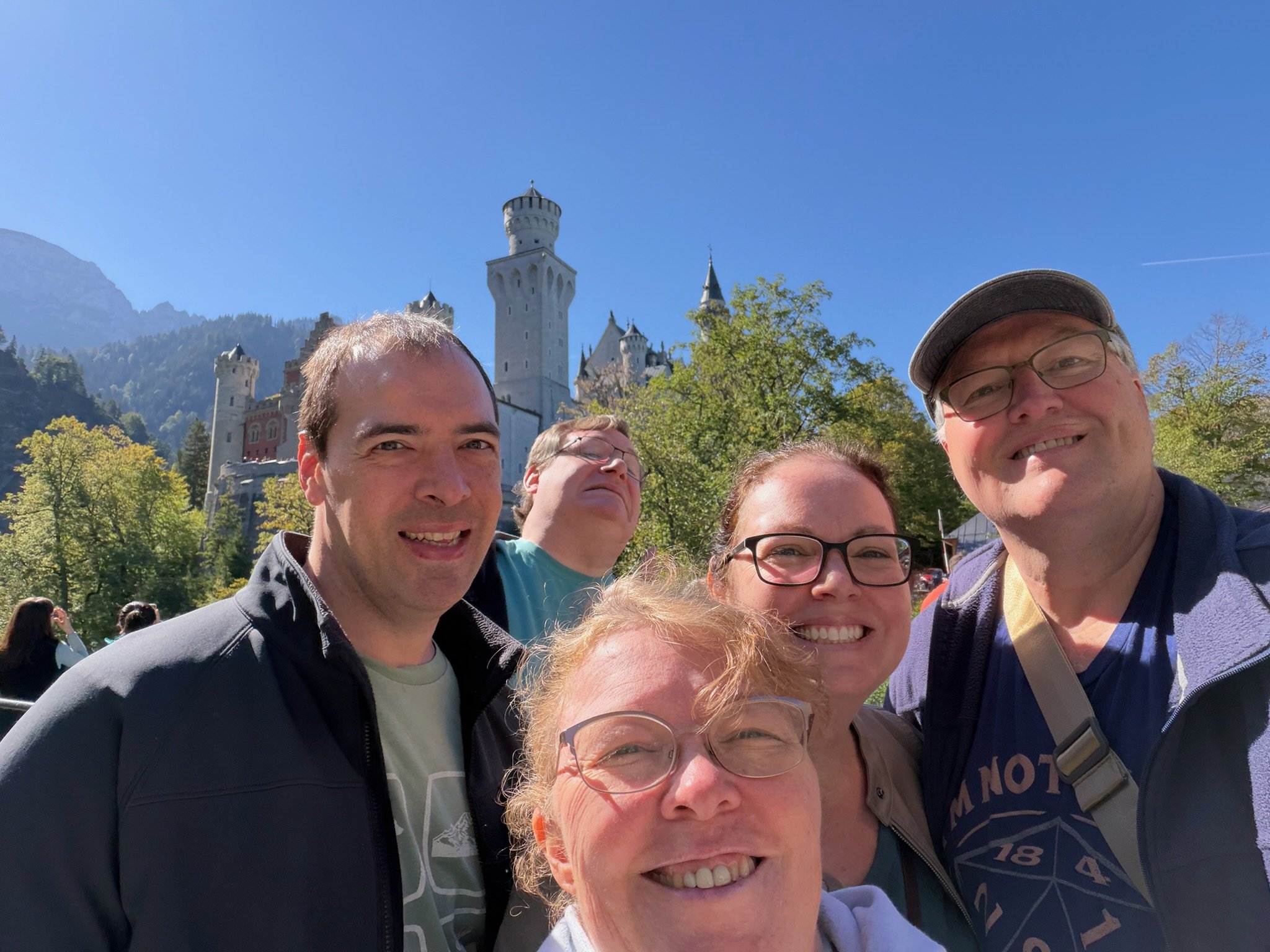
Our guide knew the routes and gave us useful pointers about reaching the best viewpoints without wasting time. One of those was Marienbrücke, or Mary's Bridge, which I'd initially remembered as the Queen's Bridge. The bridge was crowded, but people were remarkably courteous. They moved along, took a few pictures, and made room for the next person. Most headed toward the center for the classic castle view; going a little farther gave you a slightly different perspective. It was beautiful.
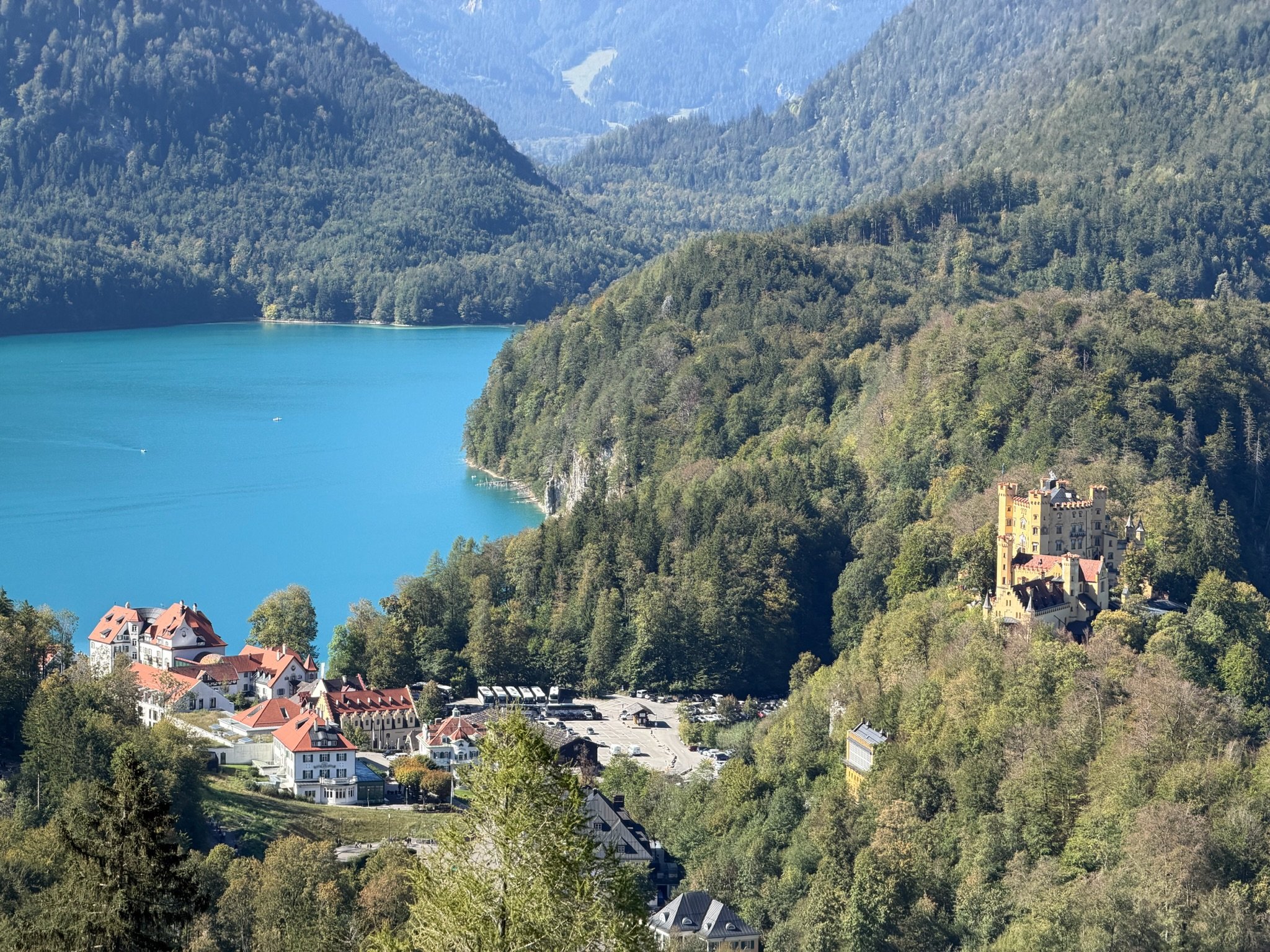
The guide also pointed us toward another viewpoint through a large wooden doorway, overlooking the valley. He joked—or perhaps genuinely believed—that other tour companies wouldn't tell you about these spots. I can't compare, but our group appreciated the tips. Teresa had chosen well. Our friends kept commenting on how comfortable the bus was and how good the guide had been.
We walked up to the castle and joined the interior tour. Photography isn't allowed inside, which disappointed me because part of the reason I take pictures is to preserve the memories for stories like this. I did look through the pictures available online, and they just aren't as good as what we saw. This is one you have to see in person to believe. The interior was extraordinary, with ornate rooms and plenty of stairs, including spiral staircases. It was absolutely worth the climb.
Of course, visiting Neuschwanstein brings up the story of King Ludwig II, often called the “Mad King.” The guide talked about his grand building projects, his preference for privacy, his conflicts with those around him, and the circumstances of his removal from power. I've wondered whether the label mad tells us more about the politics and medical understanding of the time than it does about Ludwig himself. Someone suggested that some of his behavior might today be interpreted differently, perhaps even in terms of autism. But that's speculation about a man who cannot be evaluated today, and I don't want to turn it into a diagnosis.
What we do know is that Ludwig and his physician, Dr. Bernhard von Gudden, were found dead in Lake Starnberg in 1886. The circumstances are still debated. Our guide mentioned that Ludwig was reportedly a strong swimmer, which only adds to the questions people ask. Did he take his own life? Was there an accident? Was somebody else involved? There are theories, but no definitive eyewitness account. As I thought about it, I realized that the mystery is part of why people are still fascinated by him. Whatever happened that night, neither man left us an explanation.
After the tour we went back down toward the little village area where the buses parked, with hotels, inns and restaurants. Our guide recommended a place for lunch. On a previous European trip we'd grown a little skeptical of restaurants recommended by tour guides, wondering whether there were commissions or discounts involved. Here there weren't many choices, and the menu looked like straightforward German food. We went in, had a good lunch—including Wiener schnitzel and vegetarian options for Teresa—and didn't regret it.
Next came Oberammergau, a town I remembered faintly from childhood when my father was stationed in Germany. It's picturesque in that way some Bavarian towns seem almost designed for Christmas cards. The buildings are known for elaborate painted façades, a traditional style called Lüftlmalerei. These aren't simply murals painted onto the sides of buildings. Traditionally, artists applied pigments directly to freshly laid, still-wet lime plaster, a technique known as fresco painting. As the plaster dried and cured, the pigments became part of the surface itself, helping the artwork withstand the elements. Many of these paintings depict religious scenes, local history, or everyday Bavarian life, while others use clever shading and perspective to create the illusion of architectural features such as columns, balconies, and window frames. It's remarkable how much depth and detail an artist can create on what is essentially a flat wall.
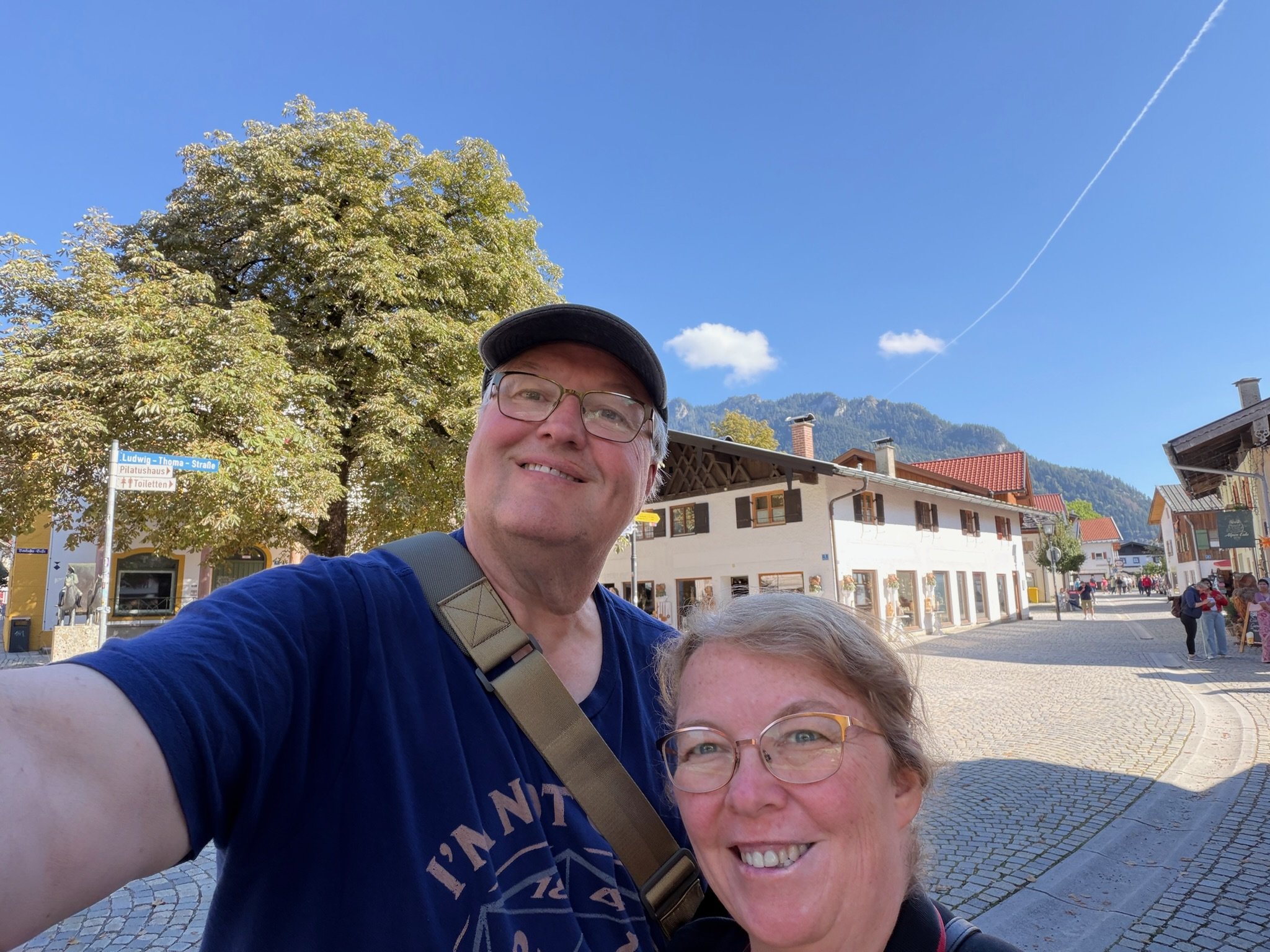
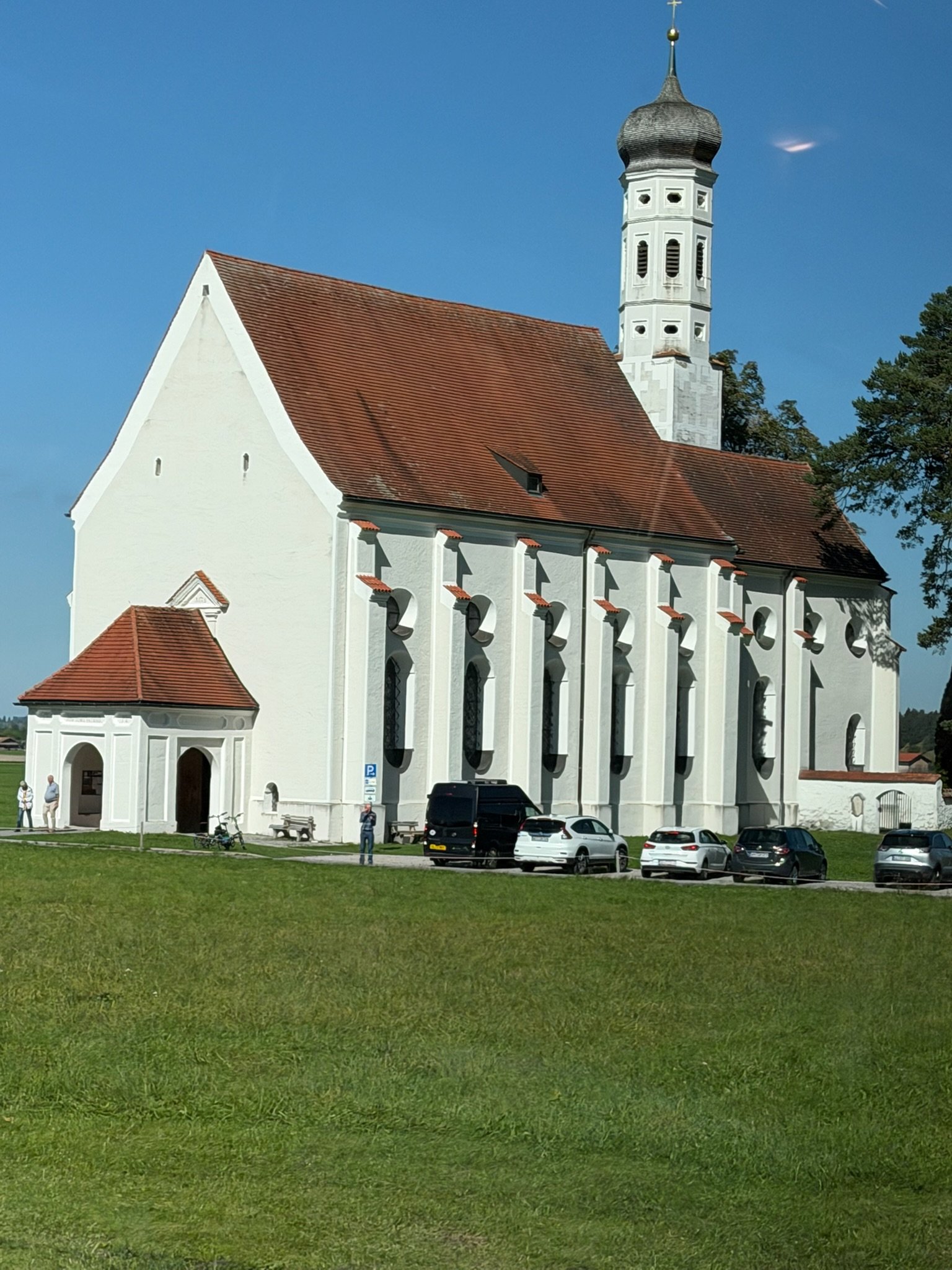
Oberammergau is also famous for its Passion Play, a tradition dating back to 1634, when villagers made a vow during an outbreak of the plague. The performances take place roughly every ten years rather than annually, with the next scheduled for 2030. Our guide also talked about local building customs and how church steeples traditionally dominate the skyline in many Bavarian towns. He explained that restrictions on building heights, and even the placement of wind turbines, helped preserve that appearance. There is some truth to the idea: Bavarian municipalities can establish local building and design regulations to protect their historic townscapes. I couldn't confirm a specific rule requiring buildings or wind turbines in Oberammergau to remain below the church steeple, but looking around at the traditional architecture, it was easy to appreciate the desire to preserve the town's character.
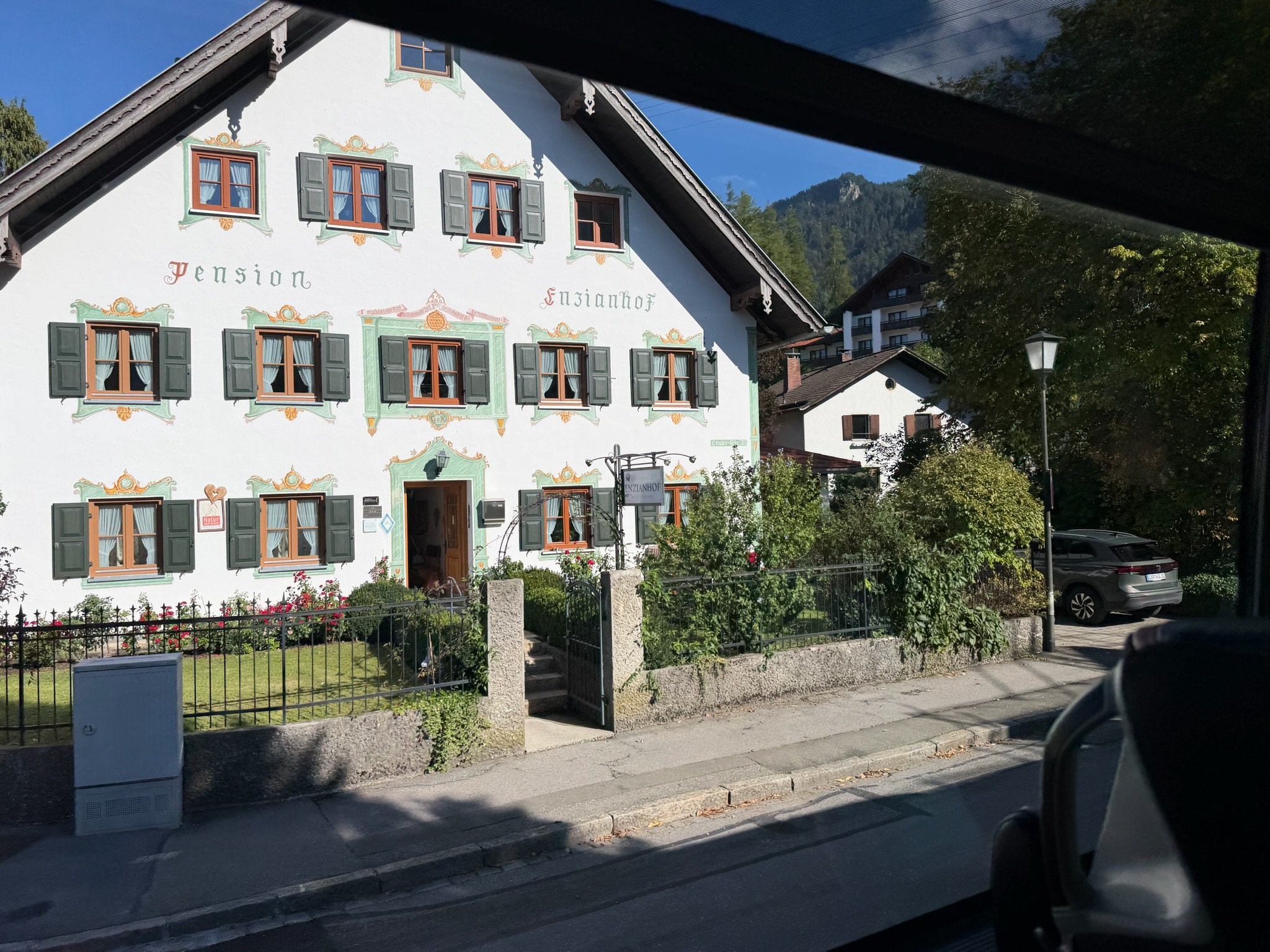
We didn't have long in Oberammergau, but there was time to walk, admire the painted buildings and look in some shops. The Christmas stores were especially tempting. More than once I looked at Teresa and thought about our ongoing theme: We're decluttering. We admired plenty and brought home very little. Somewhere in there was another gelato recommendation, too—naturally something I would be interested in, but lacked the time.
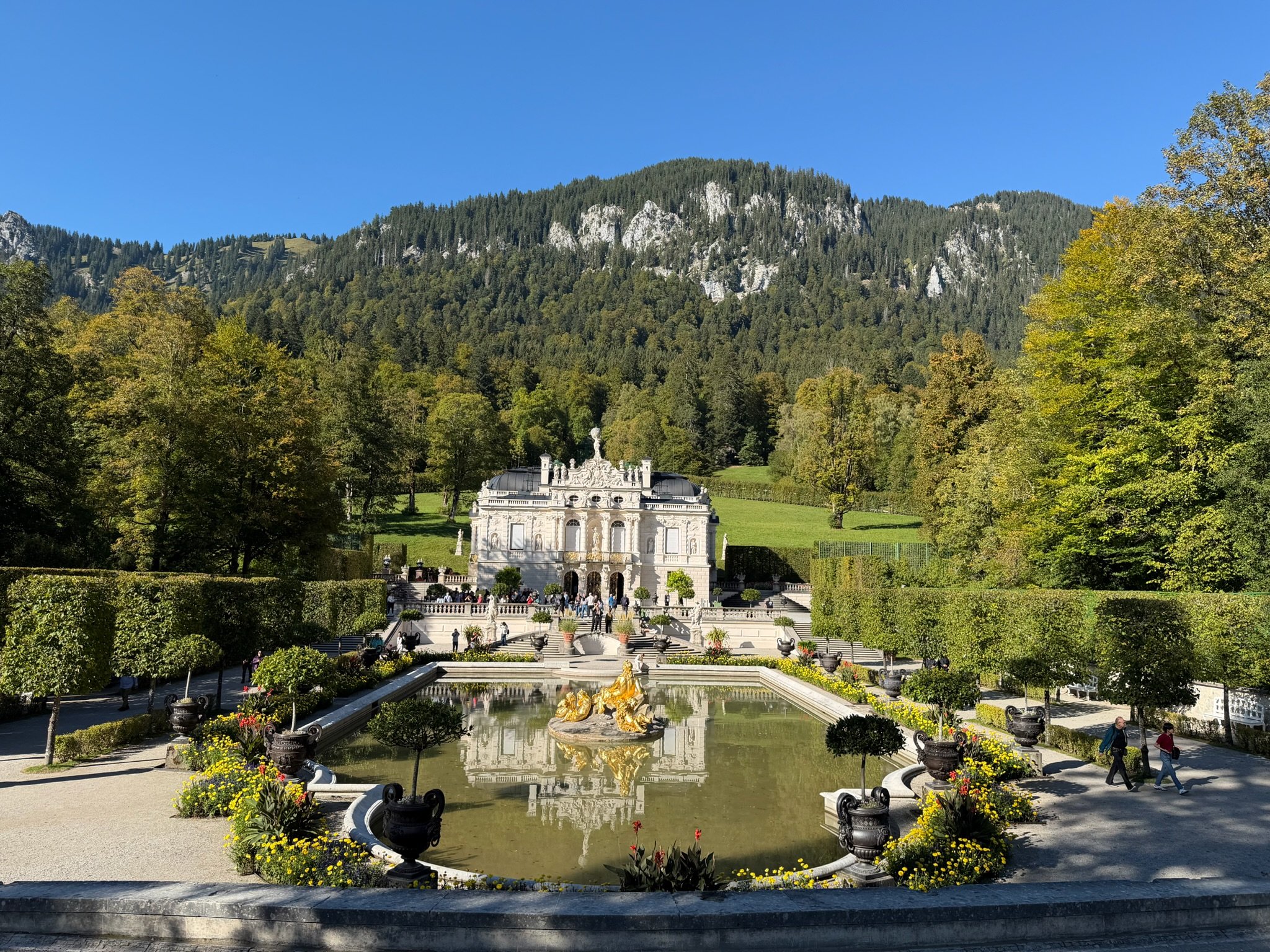
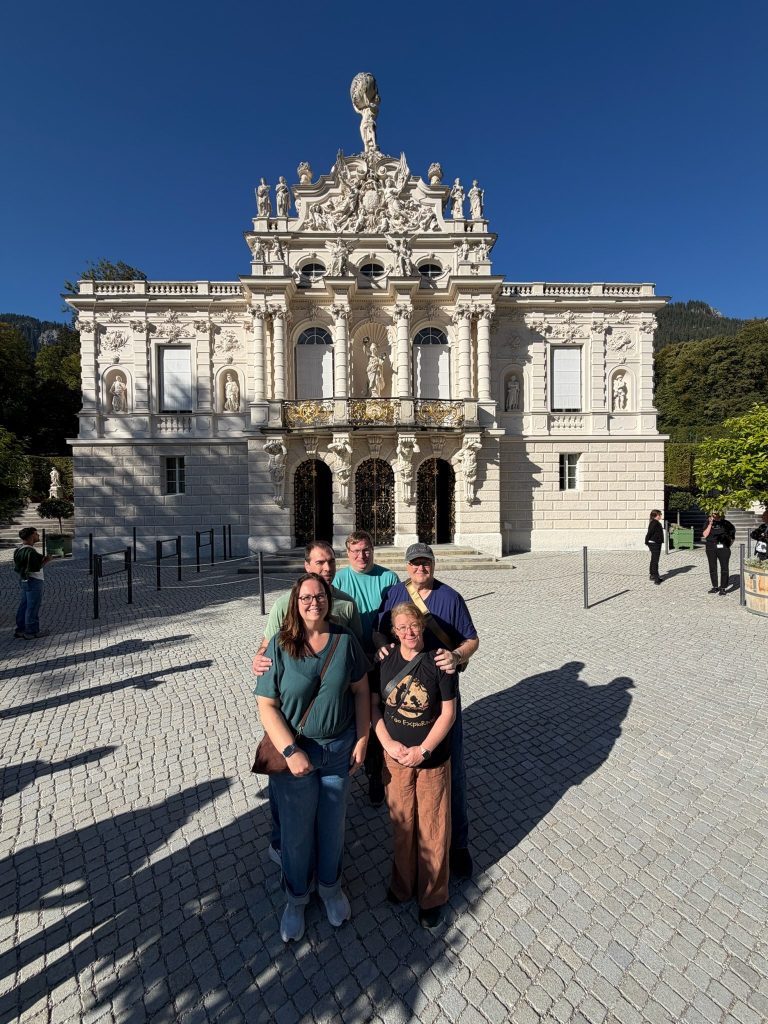
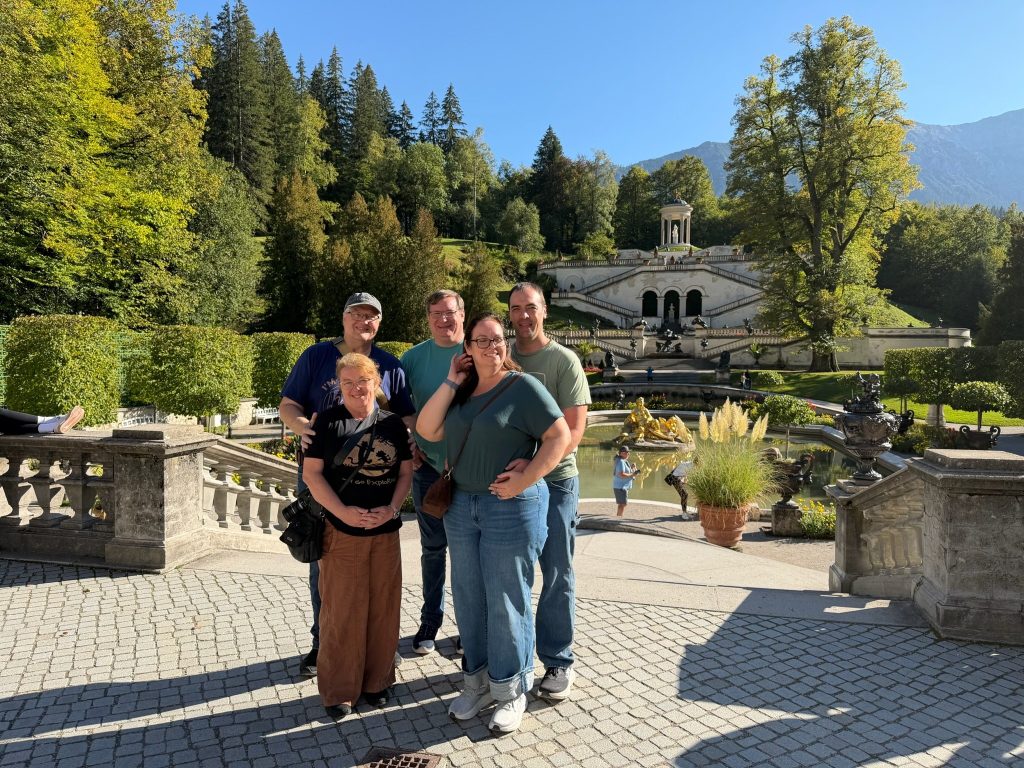
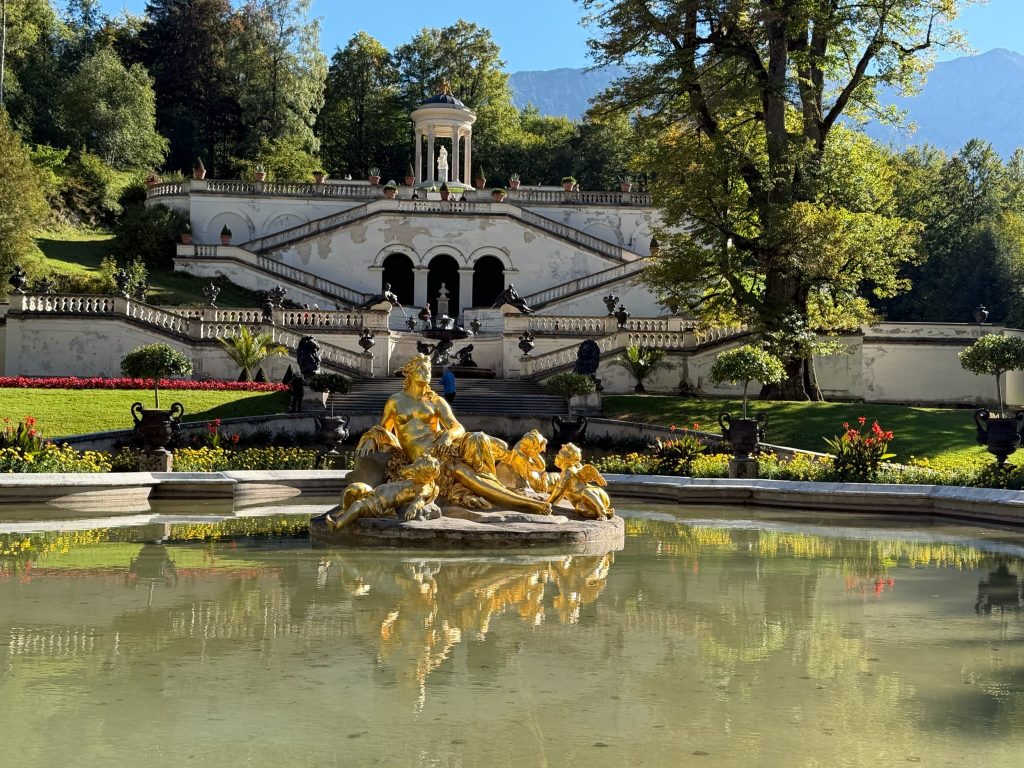
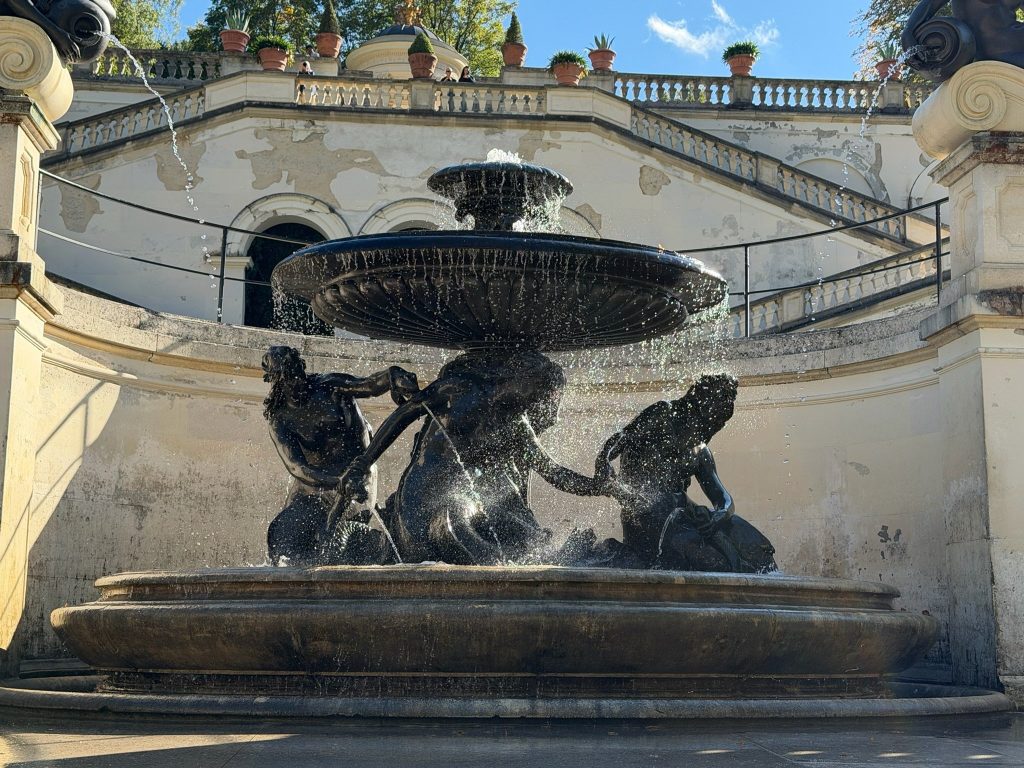
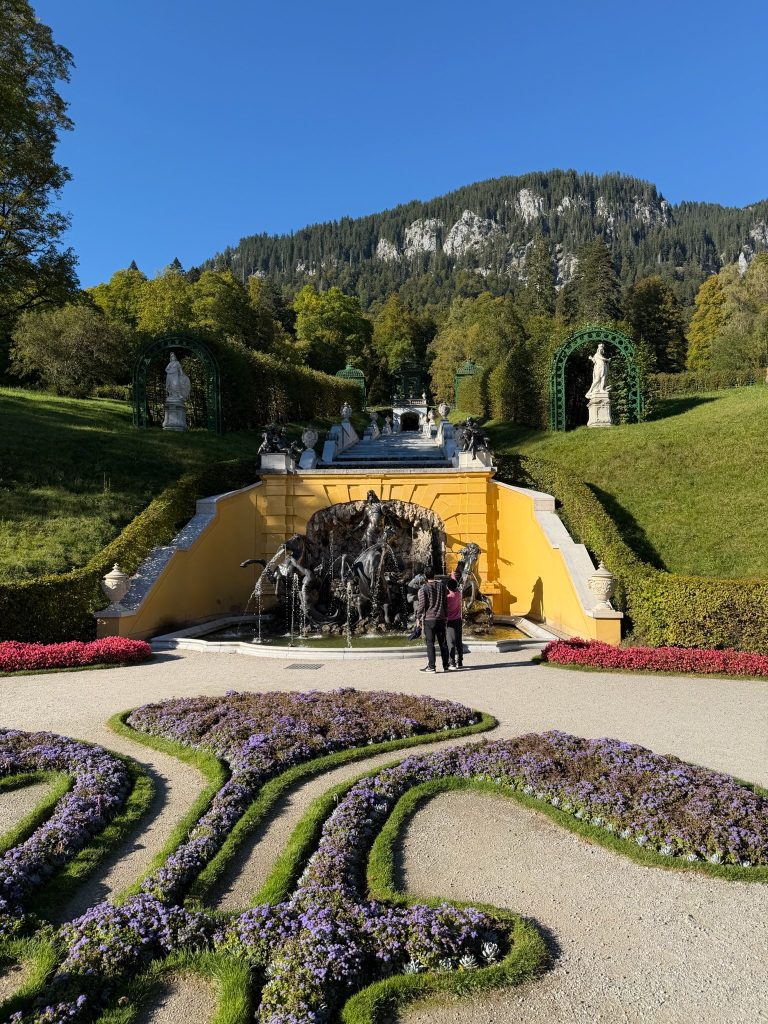
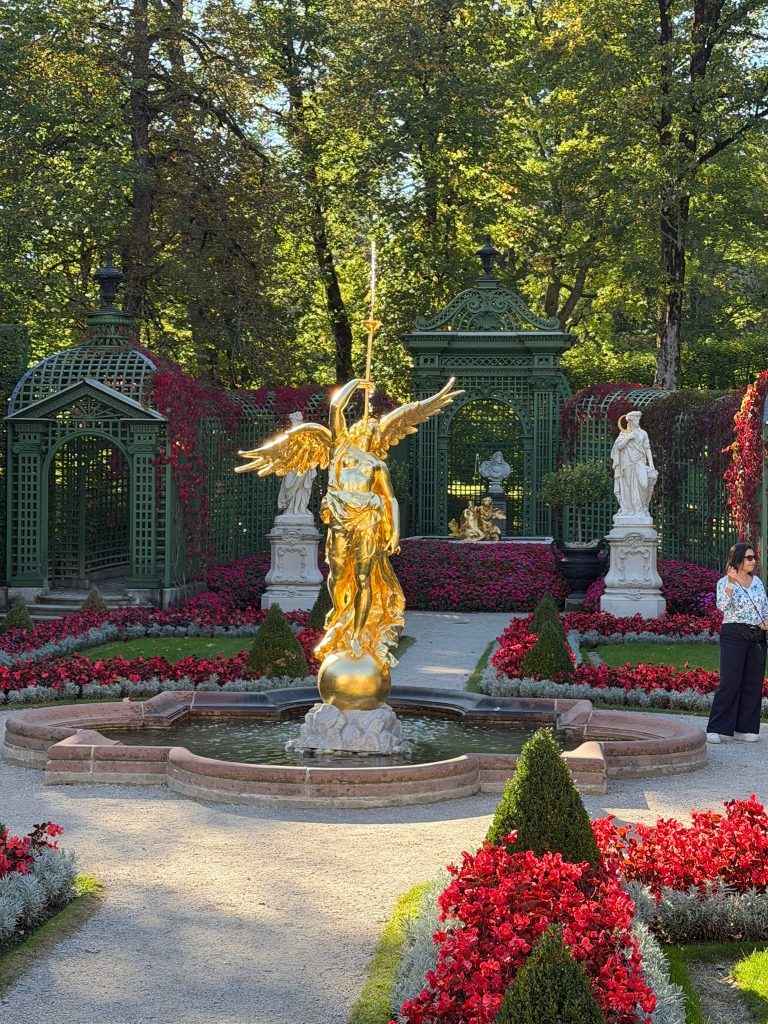
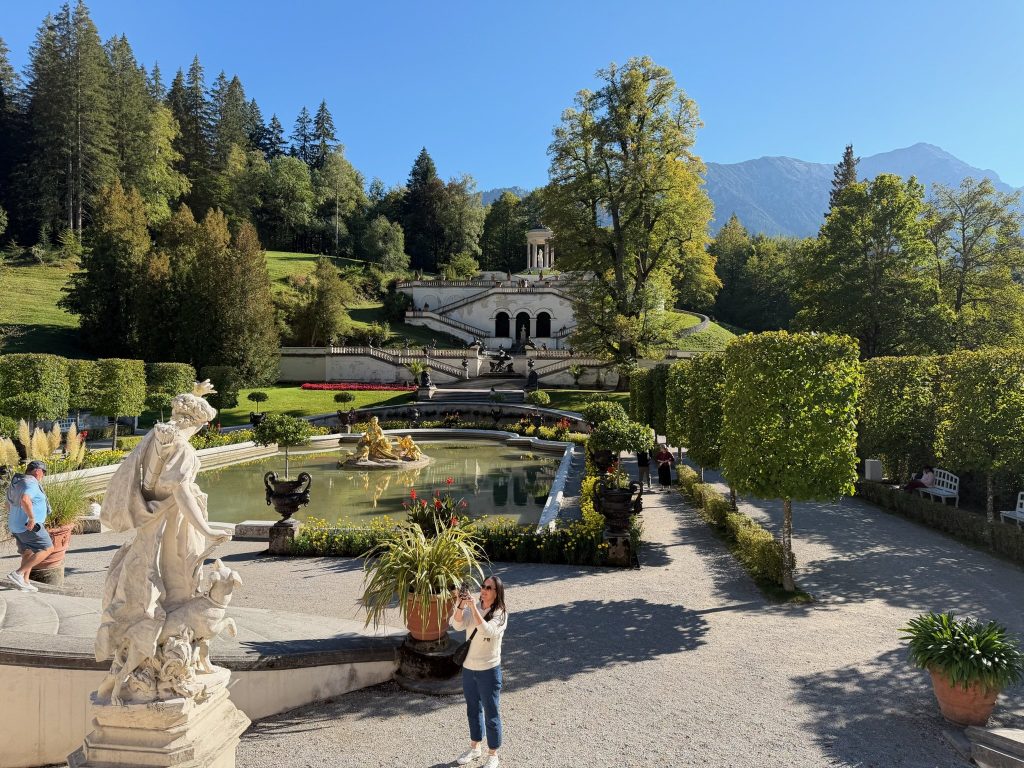
Our final major stop was Linderhof Palace, Ludwig II's elaborate retreat inspired in part by French royal architecture, particularly Versailles. The palace was beautiful inside, and once again interior photography wasn't allowed. That makes it harder to illustrate the story with our own pictures, but the gardens offered plenty to photograph. They were gorgeous, with formal landscaping and fountains, although our guide apologized that one of the main fountains had been out of service for some time. I wish we'd had more time to explore the grounds. The tour had a tight schedule, and we needed to be back on the bus.