
Adventures with Elephants
Many people dream of seeing elephants. Few expect to shake hands with one.
We woke up the next morning refreshed and ready to go. After the long journey to South Africa, a good night’s sleep had worked wonders. We headed downstairs for breakfast at the hotel before beginning the next leg of our adventure.
I ordered French toast.
When my plate arrived, something was missing. There was no maple syrup. At first, I thought perhaps they’d forgotten it. Instead, the server placed a small ceramic dish with three compartments on the table. One section contained softened butter. Another held a mixture of brown sugar, cinnamon, and spices. The third contained fresh local honey.

I tried each separately. Then I tried combinations and I am not sure I will ever eat French toast the old way again. The honey brought a richness that maple syrup never quite achieves, while the cinnamon mixture added warmth and depth. By the end of breakfast, I was mentally adding another item to my growing list of “reasons I enjoy traveling, discovering things I’d love to see back home.”
Breakfast also gave us our first opportunity to meet some of our fellow travelers.
One of the first people we spoke with was Susan. She told us she had grown up in Florida before moving to Alaska. As we looked around the dining room, we realized several other guests were also part of our tour group. At that point we didn’t know anyone, but that would change quickly over the coming week.
After breakfast we checked out and headed toward the lobby. As we did, several members of the hotel staff gathered on a small stage and began singing traditional African folk songs. The harmonies were beautiful. There was an energy and warmth to the performance that immediately set the tone for the day. We would have happily stayed and listened longer, but our transportation was gathering outside and it was time to go.
Outside we met our guides for the week. There were three of them, each driving a passenger van that would soon be loaded with travelers and luggage. Altogether there were more than twenty people joining us for the adventure ahead.
At the time they were mostly strangers. By the end of the trip, many would become friends.
Hippo Lakes was roughly three hours north of Johannesburg, but we had an important stop along the way.
Our destination was called Adventures with Elephants.
Elephants
When we arrived, I expected a tourist attraction.
After all, elephants are not new to anyone. We’ve seen them on television, in movies, in photographs, in zoos, and perhaps even in circuses years ago. We think we know what to expect.
Then you stand next to one and everything changes.
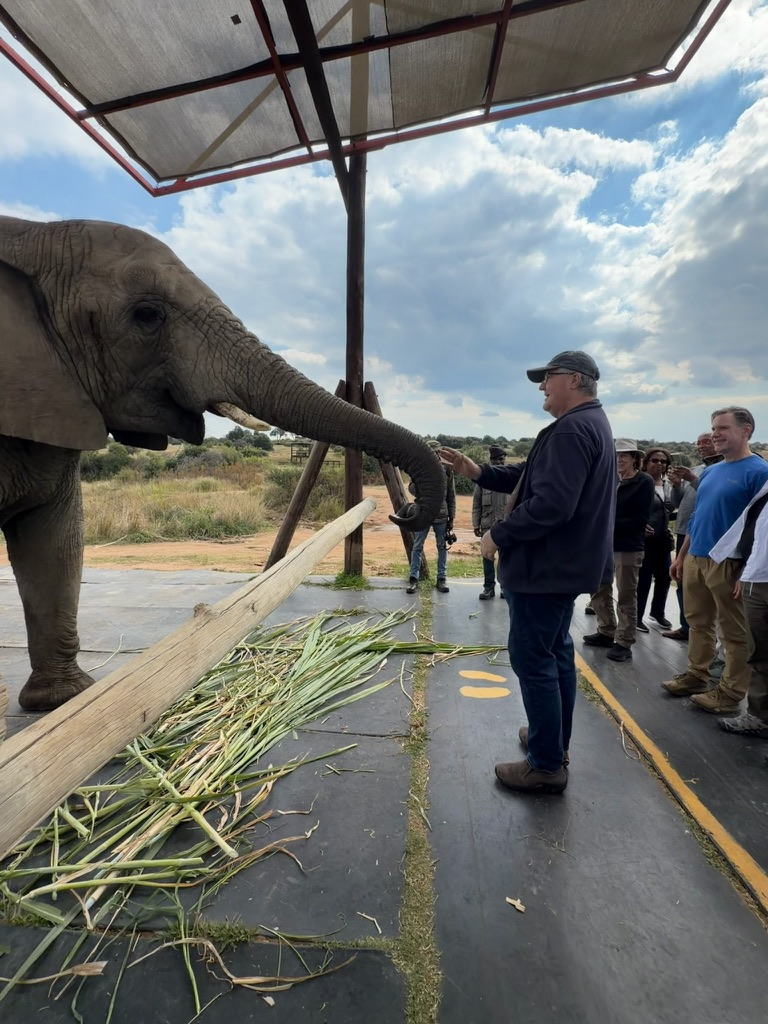
Standing face-to-face with one of the largest land animals on Earth and having it gently reach out its trunk as if introducing itself was not something I ever expected.
Our African adventure was only beginning, and already reality had no intention of matching my expectations.
What we discovered wasn’t a tourist attraction at all. It was an immersive educational experience set within a conservation area where the focus was understanding elephants rather than simply observing them.
The staff explained why elephants can sometimes be viewed as a nuisance by farmers and ranchers. An elephant doesn’t recognize property lines, fences, crop investments, or carefully planned orchards. A hungry elephant can destroy months of work in a matter of hours. A herd moving through an area can damage fences, water systems, and vegetation with surprising ease.
At first, some of the stories made the elephants sound like villains.
Then the guides shifted perspectives.
The real problem isn’t elephants. The real problem is that both humans and elephants need the same land. As populations grow, people expand into areas that were once wildlife habitat. Animals lose migration routes, access to water, and traditional feeding grounds. Eventually conflicts become unavoidable.
The challenge of conservation isn’t simply protecting wildlife. It is finding ways for wildlife and people to coexist. That is where facilities like Adventures with Elephants play an important role.
The elephants on the conservancy serve as ambassadors for their species. The handlers were not trainers in the circus sense of the word. They were educators. Their goal was to help visitors understand these animals and the challenges surrounding conservation. Through education, they build support for wildlife protection, habitat preservation, and responsible tourism.
In many ways, conservation starts with connection. People are far more likely to protect something once they’ve experienced it firsthand. And we certainly experienced it firsthand.
We learned about elephant intelligence, not through tricks, but through demonstrations of memory, communication, and problem-solving abilities. The old saying that “an elephant never forgets” suddenly seemed much less like folklore and much more like fact.
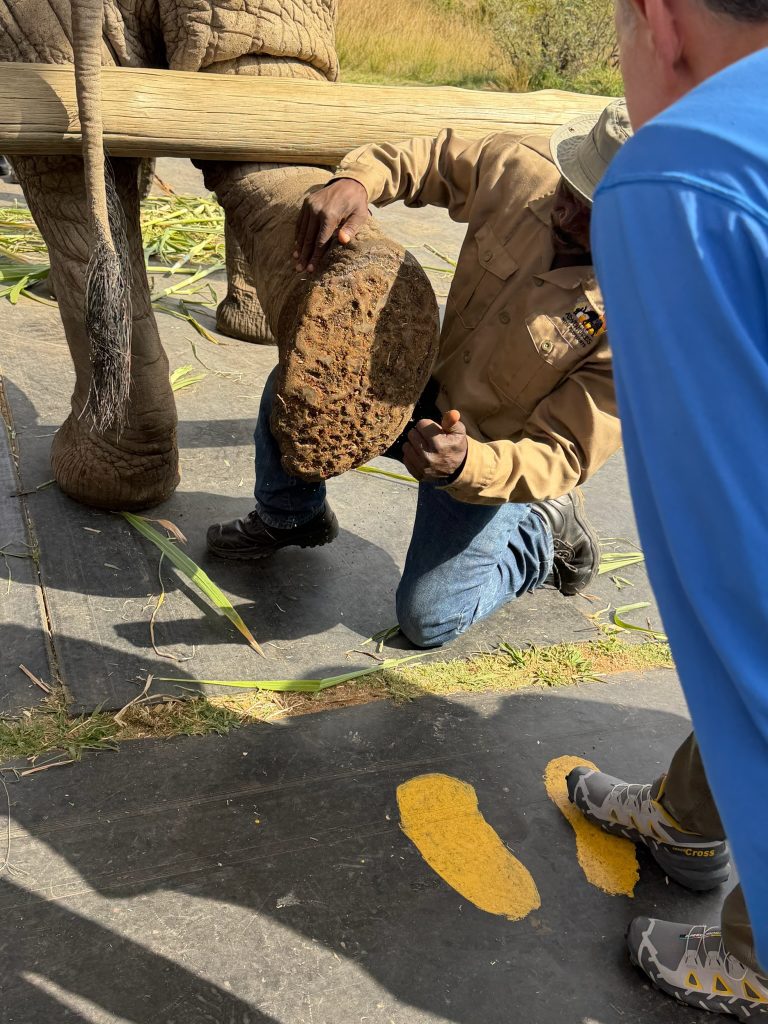
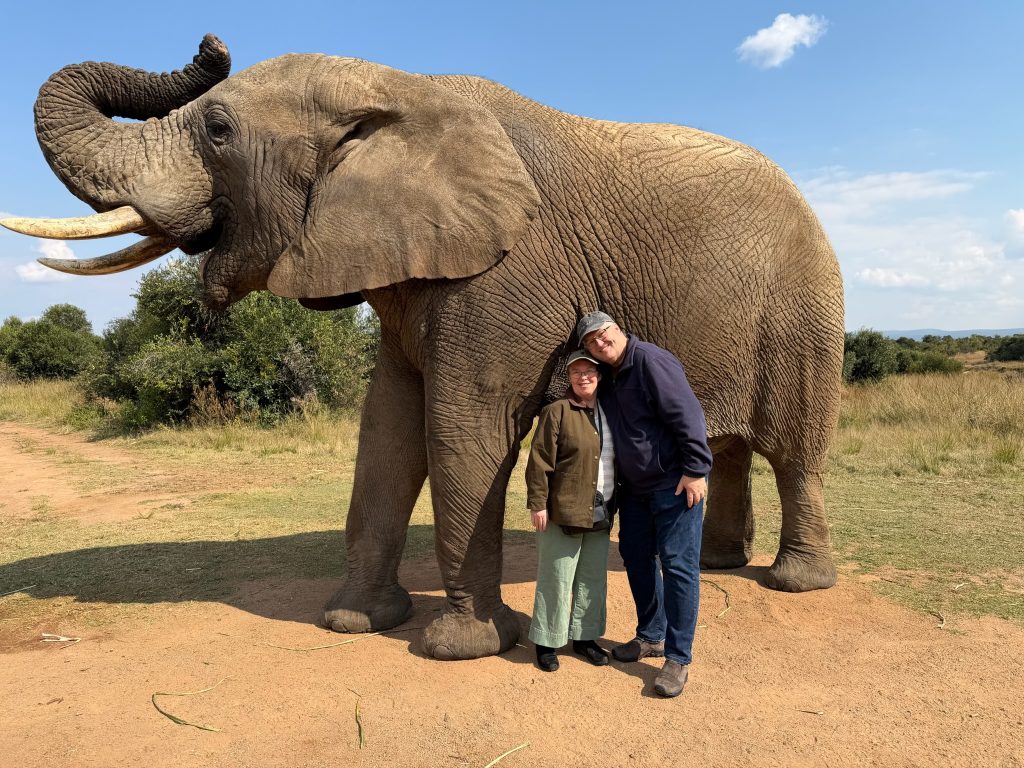
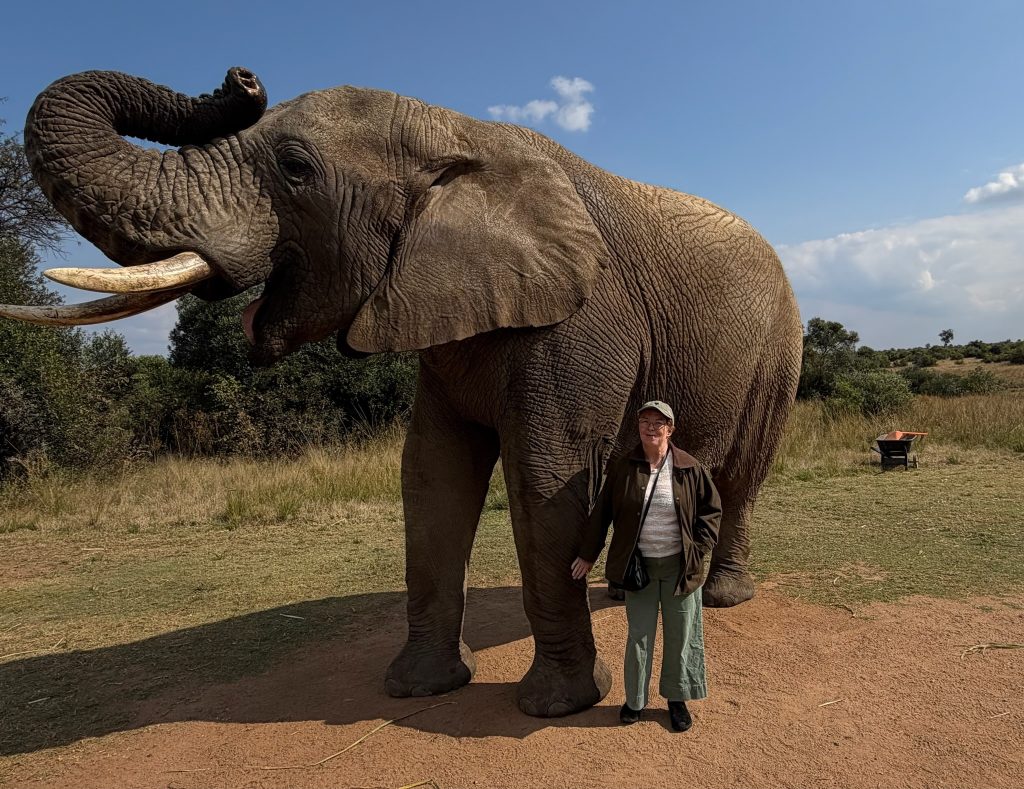
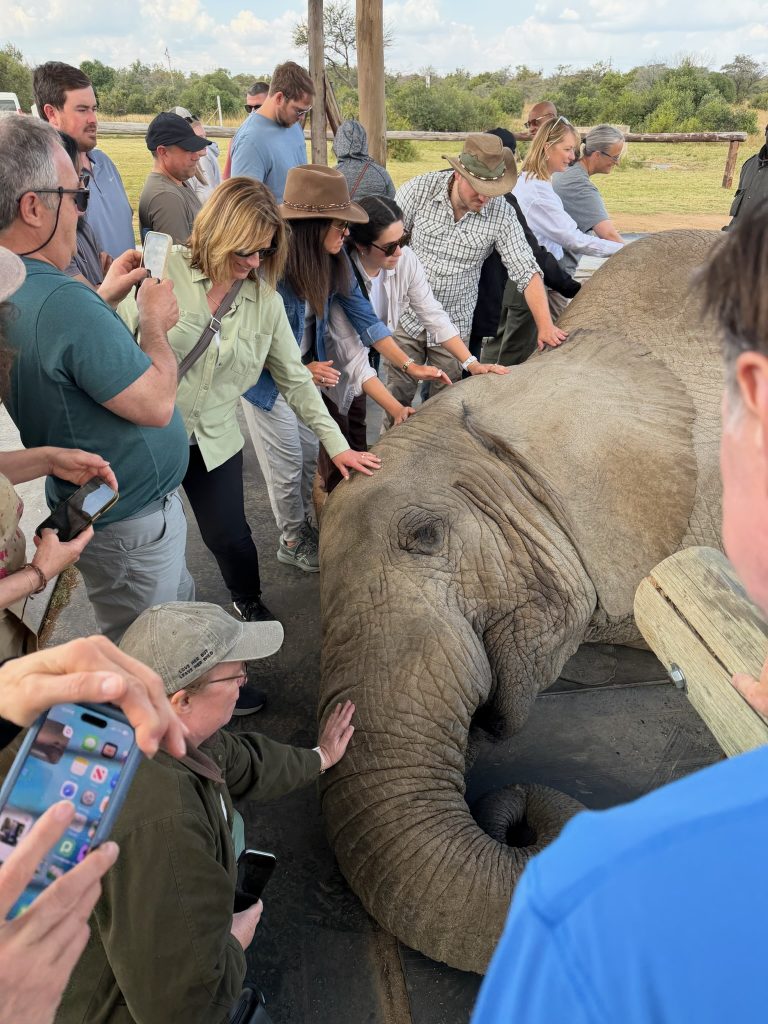
Then came the encounters. We stood beside these giants. We touched them. We felt the rough texture of their skin. We examined the soles of their feet. We felt the warmth and pulse flowing through their ears. Standing next to an elephant changes your perspective. You become very aware that this creature could crush you without effort if it chose to do so.
Instead, they were remarkably gentle. Well, mostly. A few visitors discovered that elephants also possess a mischievous sense of humor when they found themselves unexpectedly sprayed with water. Apparently elephant showers are complimentary.
One of the highlights was the famous elephant handshake. An elephant would gently extend its trunk toward you, wrapping it around your hand in what felt surprisingly like a greeting. It was one of those moments that sounds ridiculous until it happens to you. And then suddenly it feels perfectly natural.
After the educational program, we were treated to lunch by our guides and Hippo Lakes. This was our first real taste of African cuisine, and it did not disappoint. There were plenty of traditional dishes to sample, along with options for travelers who had dietary restrictions. It was clear that our hosts had experience accommodating guests from all over the world.
Fed, hydrated, and carrying far too many new photos, we climbed back into the vans and continued our journey toward Hippo Lakes.
By now our van group was becoming more comfortable with one another. Conversations flowed easily as we compared travel stories and discussed what we hoped to see during the week.
Then something caught my eye outside the van, in a field. I looked closer.
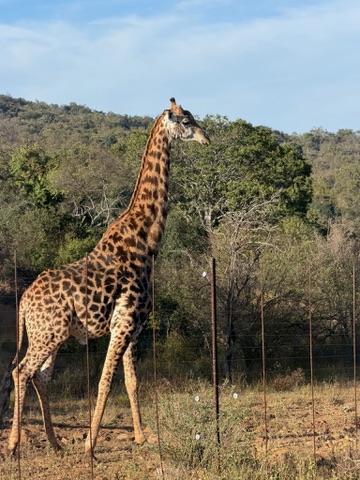
“Giraffe!” I yelled.
Several heads immediately snapped toward the windows. Sure enough, there it was, casually browsing from a tree beside the road as if being a giraffe was the most normal thing in the world.
Only about half the van managed to spot it before we passed. “Good eye,” someone from our Tennessee contingent said. I accepted the compliment. After all, I had just spotted my first wild giraffe in Africa.
For the rest of the drive, everyone became amateur wildlife spotters, scanning the landscape for anything that moved.
The safari hadn’t officially started yet. But for us, it already had.
Now, as incredible as the elephants were, we still hadn’t reached our final destination.Ahead of us waited Hippo Lakes, where luxury tents, wildlife, campfires, and star-filled skies would introduce us to a very different rhythm of life.
0 Comments