
The Tent That Wasn’t a Tent
The Road to Hippo Lakes
As we were driven through South Africa, we left the larger towns behind, the roads began to change. Some stretches were smooth enough. Others were potholed, washed out, or under reconstruction from recent storm damage. In several places, traffic narrowed to a single lane where crews were rebuilding sections of roadway.
At those locations, gates controlled traffic flow from either direction. Signs warned that delays could average fifteen minutes, though fortunately we never had to wait quite that long.
The farther we traveled, the more remote everything felt.
Along the way, we passed through communities that stood in stark contrast to the luxury lodges featured in travel brochures. Homes built from corrugated metal, simple brick, and reclaimed materials dotted the landscape. Some appeared to have outdoor washing areas and basic sanitation facilities. We never stopped long enough to understand the lives of the people who lived there, but seeing these communities was a reminder that every country contains many different realities at once.
Travel has a way of showing both beauty and hardship from the same vehicle window.
The African Massage
Eventually our guide smiled and announced that we should prepare ourselves for an “African massage.”
That sounded intriguing.
A few moments later she turned off the paved road and onto a dirt track that had clearly seen better days.
Now, before your imagination gets carried away, this wasn’t some suspension-testing nightmare. It wasn’t bone-jarring or teeth-rattling. Nobody was launched into the ceiling of the van.
But every bump, dip, rut, and washout certainly made itself known. The best comparison I can offer is a high-powered massage chair; a very enthusiastic massage chair. Everyone bounced and laughed as we made our way deeper into the reserve.
By the time we reached the entrance gate, the nickname made perfect sense.
Checking Into the Reserve
At the reserve entrance, we encountered something none of us expected.
Before entering, everyone was asked to step out of the vehicle and clean their shoes.
Beside the gate sat a shallow container filled with soapy water and covered with artificial grass. One by one, we stepped into the solution, and stepped out again. The process took only a few moments.
At the time, it seemed unusual. Later we learned that many reserves and agricultural areas use similar biosecurity measures to help prevent the spread of invasive species, seeds, diseases such as ‘Foot and Mouth disease’, and other contaminants between properties.
Once everyone had completed the ritual, we climbed back into the van and continued our journey.
And suddenly everything felt different.
First Glimpse of Hippo Lakes
Inside the reserve, the landscape opened up around us.
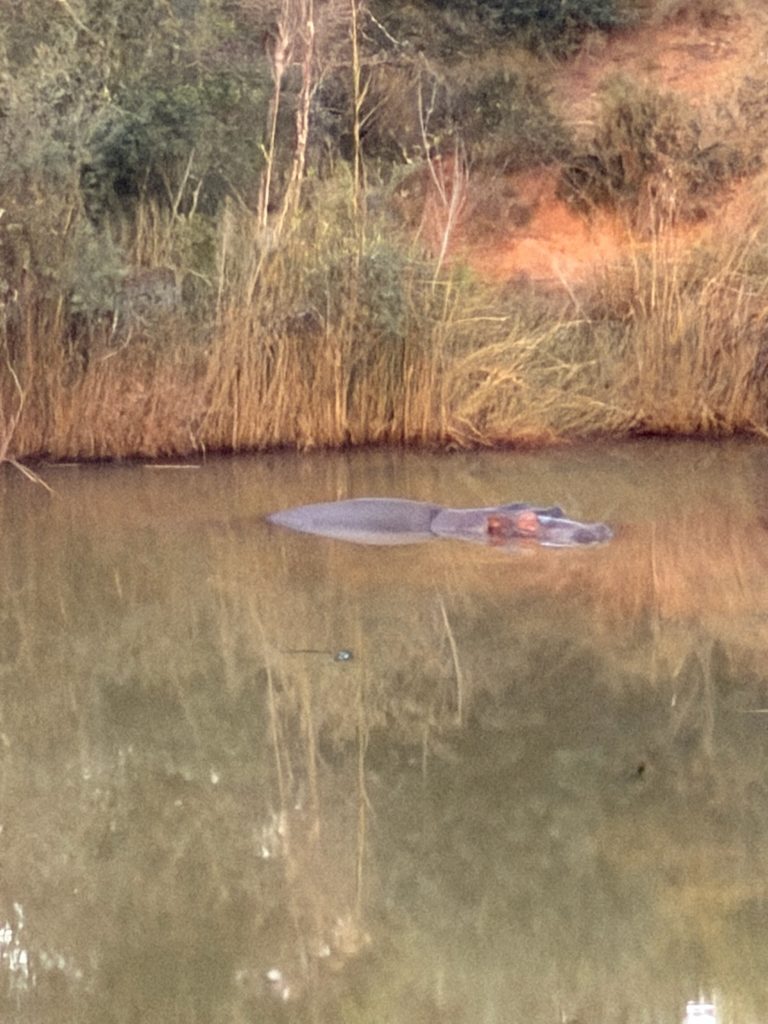
We passed lakes reflecting the afternoon light. We spotted wildlife along the roadside. We crossed a dam. We drove through another gate. And then, nestled into the landscape, Hippo Lakes appeared.
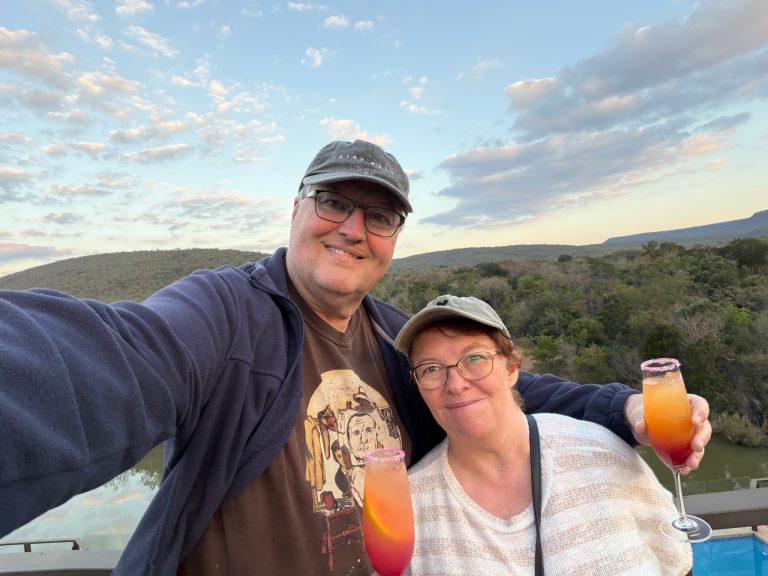
Photographs online can be deceptive. Some places look better online than they do in person. Hippo Lakes was the opposite. The property felt larger, more impressive, and somehow more connected to the surrounding environment than any photograph had suggested. It immediately felt less like a lodge and more like a small village carefully woven into the landscape.
The Scale of the Property
One thing that surprised me was the sheer size of the operation.
Many travelers hear the term “safari camp” and imagine a handful of tents gathered around a campfire. Hippo Lakes was much more extensive than that.
The property includes multiple lodging areas, gathering spaces, dining facilities, lakes, roads, staff operations, and guest accommodations spread throughout the reserve. Yet despite its size, it never felt crowded.
That’s one of the interesting aspects of many safari properties. Guests are intentionally spread out across the landscape, creating a sense of privacy and immersion.
You feel alone, even when many other travelers are sharing the experience. Once checked in, we were led to our tent.
Camping in Africa
When someone says you’re staying in a tent, certain images come to mind.
Maybe you’re picturing a sleeping bag on the ground, a zipper that never quite works correctly, and a nightly battle against mosquitoes. Perhaps you’re imagining a weekend campground, a portable stove, and a desperate search for a clean restroom at three in the morning.
This wasn’t one of them. In fact, calling what we stayed in a “tent” feels a little dishonest.
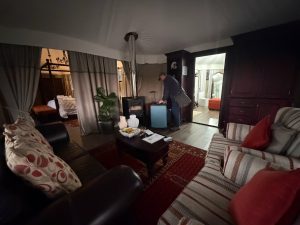
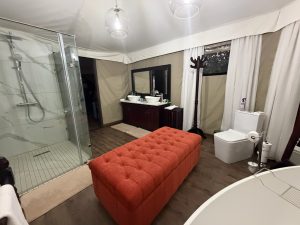
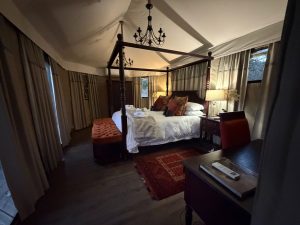
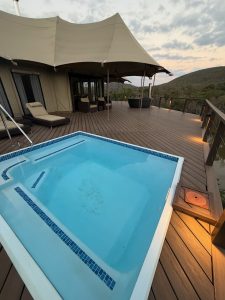
Our “tent”, the word deserves quotation marks because it shares very little with anything I have ever camped in. There was a real bed, a fireplace, electricity, climate control, a full bathroom with a tub and a shower, a spacious deck with seating.
Canvas walls? Sure, technically, but if this was camping, then our house is technically a shed.
The accommodations managed to preserve the romance of a safari tent while eliminating nearly all of the reasons people complain about camping.
It was an arrangement I found surprisingly easy to support.
Outside on the deck, there was a private plunge pool. Nearby sat a wood-fired hot tub. It was not a decorative hot tub; it was an actual hot tub heated by a wood fire that staff would prepare upon request.
I remember looking around and wondering if somebody had misunderstood the assignment.
“Build a safari tent.”
“Okay, but what if we also make it a luxury resort?”
And somehow the combination worked. The comfort never distracted from the environment. Instead, it allowed us to spend more time enjoying it.
The Sounds of Africa
As evening approached, Africa introduced itself through sound. Bird calls echoed across the water. Insects provided a constant background chorus. Occasional animal noises drifted through the darkness. Without city traffic, sirens, or the endless hum of suburban life, the natural world became the soundtrack.
It was peaceful.
And just unfamiliar enough to remind us we were thousands of miles from home.
The Staff and Hospitality
One thing that stood out immediately was the hospitality. Much of this was coordinated through WhatsApp. The staff genuinely seemed invested in ensuring guests had a memorable stay.
The “WhatsApp” channel was the central communications means through the stay.
Need a ride? Send a message.
Need assistance? Send a message.
Need information? Send a message.
Within minutes someone usually responded. It was also the central place for information. Daily Schedules were posted. Meals appeared exactly when expected. It was also a place for guests to connect.
It was one of the most effective concierge systems I’ve encountered while traveling.
Food Worth Mentioning
The food deserves its own section.
Many travelers wonder whether remote safari lodges serve decent meals. At Hippo Lakes, the answer was an easy yes.
Meals blended local influences with familiar favorites, creating dishes that felt adventurous without being intimidating. Everything was fresh, thoughtfully prepared, and beautifully presented. Of course, after a full day of travel and exploration, almost anything tastes better.
Still, this was genuinely good food.
Normally, the lodge dining room is arranged with separate tables, creating a more traditional restaurant atmosphere. Because our group was so large, however, the staff adapted. The dining room was transformed into something that felt more like a banquet hall, with long tables arranged end-to-end and buffet stations serving meals at scheduled times throughout the day.
The buffet format worked surprisingly well. One concern with buffets is that every meal begins to feel the same after a few days. That wasn’t the case here. The menu changed daily, and each meal incorporated local flavors, spices, and ingredients. Some dishes were familiar, while others encouraged us to step a little outside our culinary comfort zones. Every meal felt intentional rather than repetitive.
What impressed me even more than the food itself was the attention to detail.
Several members of our group had special dietary requirements. Teresa is a vegetarian. Another guest was pescatarian. Others required gluten-free options. Rather than asking those guests to simply make do with whatever happened to be available on the buffet, Chef Pila and his team prepared individual dishes designed specifically for their needs.
Chef Pila would create something in the kitchen that was a specially prepared plate for Teresa. While she certainly enjoyed some of the buffet offerings, she was also treated to meals created specifically for her. The same care was extended to the other guests with dietary restrictions.
And here’s the funny part. A few times, other people at the table looked at Teresa’s plate and said something along the lines of, “Wait… why didn’t I get that?” That’s usually a pretty good sign.
The food was excellent, but what really stood out was the hospitality behind it. Nobody was treated as an inconvenience. Dietary needs weren’t viewed as a problem to solve but simply as another opportunity to take care of guests.
That’s the kind of detail people remember long after they’ve forgotten exactly what was on the menu.
Looking ahead
As impressive as the accommodations were, the tent wasn’t the most memorable thing waiting for us at Hippo Lakes. That would come the next morning.
We were about to discover that safari life doesn’t run on human schedules.
0 Comments