
Safari Time Runs Differently
Africa doesn’t care what time you want breakfast.
The animals make the schedule.
Back home, most of us organize our days around clocks, calendars, and reminders. We decide when to wake up, when to eat, and when to go exploring. On safari, that relationship gets flipped upside down. The bush doesn’t operate on human convenience. Lions don’t care that you’re still finishing your coffee. Elephants don’t check your itinerary. Leopards certainly don’t care what time your alarm goes off.
If you want to see wildlife, you learn very quickly that safari life revolves around the animals, not the guests. And honestly, that’s part of the magic.
Before Sunrise Comes Early
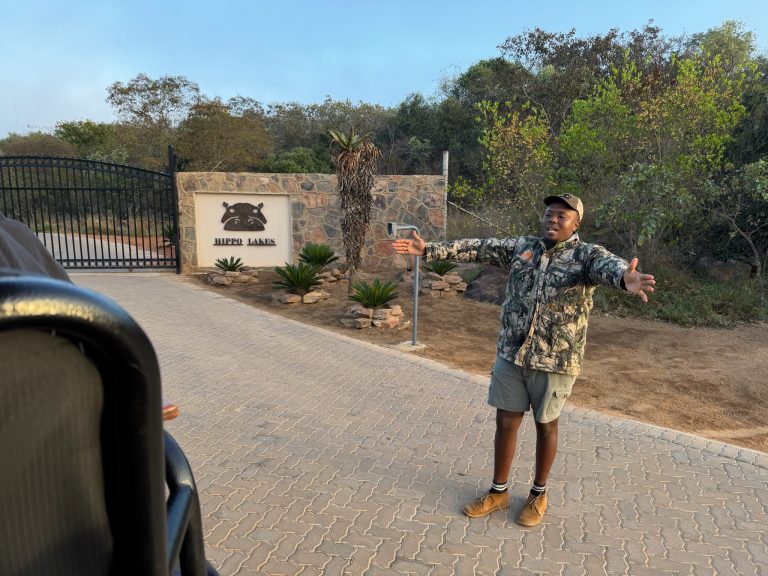
One of the first lessons we learned at Hippo Lakes was that mornings start early, very early; the kind of early where you briefly question your life choices while fumbling for a flashlight and wondering if anyone really needs to be awake before sunrise.
And then you step outside. The air is cool. The stars are still overhead. Somewhere in the distance, something calls from the darkness. The entire landscape feels different than it does during the day.
Suddenly, getting up early makes a lot more sense.
Many of Africa’s most active animals are moving during the hours just before and after sunrise. Temperatures are cooler, predators are still hunting, and herbivores are often feeding before the heat of the day arrives.
By midday, many animals disappear into shade and become far more difficult to spot. If you want the best wildlife viewing opportunities, you go when the animals are active, not when you’re ready.
Why Morning and Evening Drives Matter
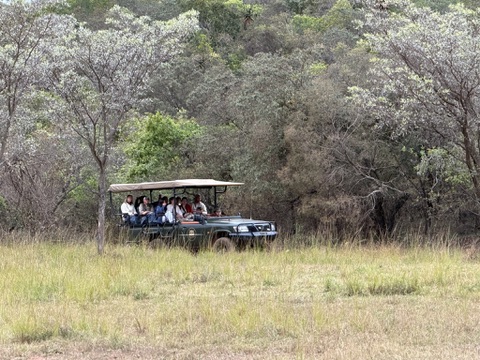
Our days generally revolved around two game drives, one in the early morning, one in the late afternoon and early evening.
At first glance, that schedule might seem arbitrary. It’s not. The middle of the day can be surprisingly quiet. Temperatures rise, animals conserve energy, and movement slows dramatically. A lion lying under a tree for six hours may not be exciting television, but from a lion’s perspective it’s excellent energy management.
Morning drives often reveal animals returning from nighttime activity. Evening drives catch them waking up and preparing for another active period. Those transition periods are where much of the action happens. It’s nature’s version of rush hour.
Learning to Read the Bush
One thing I didn’t fully appreciate before arriving was how much information experienced guides can gather from what looks like absolutely nothing.
Our guides would slow down, stop, and begin noticing details that most of us would never have seen, a bent blade of grass, a fresh track in the dirt, bird calls, movement in distant brush, or sometimes, a simple bush.
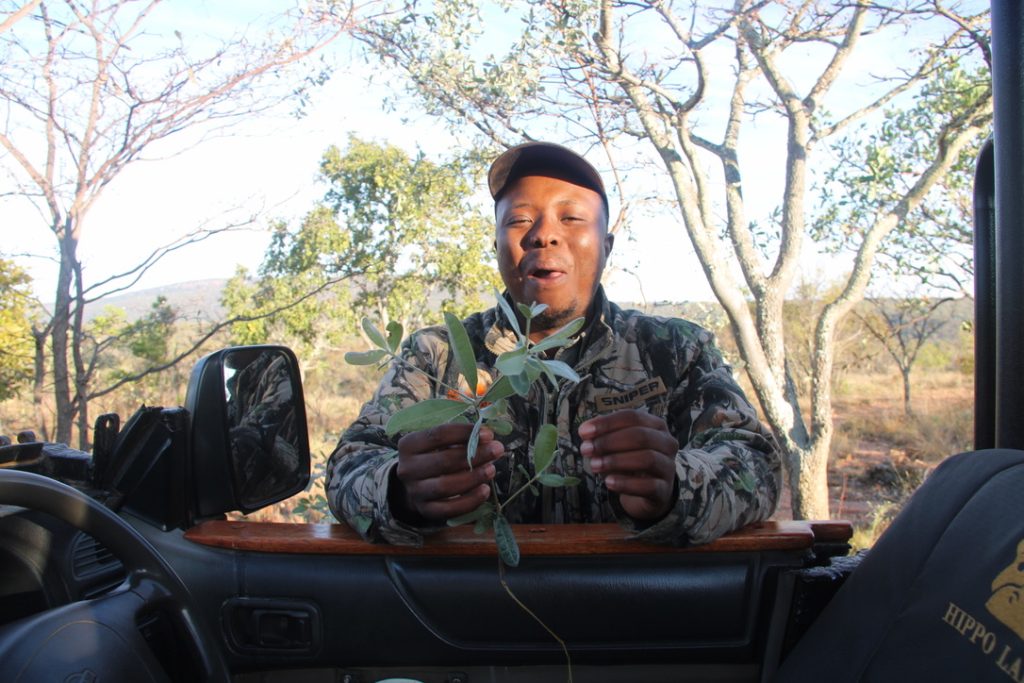
One morning our guide stopped the vehicle and pointed out two bushes growing near each other. To me they looked almost identical. He walked over to the first one, lifted a branch, and revealed rows of nasty hook-shaped thorns hidden underneath the leaves.
Then he walked over to the second bush, plucked a few leaves, and handed them around.
“The first one,” he explained, “would be a very bad choice if you needed emergency toilet paper.” He held up the second. “This one is more like five-ply.”
The lesson was equal parts survival training and comedy routine, but it highlighted something important. The guides weren’t just teaching us about wildlife. They were teaching us about the entire environment. Plants, trees, birds, insects, even animal behavior… every drive felt a little like a mobile classroom, just with better scenery than most schools can offer.
The Art of Tracking
Tracking is part science, part experience, and part storytelling.
The guides could identify tracks crossing a road and often tell us which animal had passed through, which direction it was moving, and whether it had done so recently. They pointed out subtle differences in edges, depth, and disturbances in the soil that most of us would never have noticed.
But tracking involved far more than footprints. There were broken branches, fresh feeding signs, bird activity, sounds from the bush, and of course, dung. Lots and lots of dung.
It turns out that an experienced guide can learn an astonishing amount from a pile of animal droppings. Size, shape, consistency, contents, and even location can help identify what animal left it behind. In some cases, they could even determine whether it came from a male or female.
What looked like an unpleasant pile of evidence to us looked like a detailed report to them. Honestly, it was impressive. And with the right guide, very humorous (I am looking at you, AB).
By the end of the trip, we learned that tracking isn’t simply following footprints. It’s collecting clues from dozens of different sources and piecing them together into a story.
And after several days of listening to our guides explain exactly what various animals had left behind and why it mattered, I came to a simple conclusion:
These guides really knew their shit.
Safari Isn’t a Zoo
This may sound obvious, but it’s worth mentioning.
A safari is not a zoo; animals are not waiting behind fences. They are not fed on a schedule. There are no guarantees. No one can promise you’ll see a lion at 9:15 AM, an elephant at 10:30, and a leopard after lunch. Wild animals move where they want, when they want. They eat what they find, migrating to areas with food and protection.
Sometimes they’re visible. Sometimes they’re not. That’s part of what makes each sighting special. When you finally spot an animal after searching for it, the experience feels earned in a way that a zoo encounter never can.
There’s anticipation. Discovery. Excitement. And occasionally a little luck. Actually, sometimes a lot of luck.
Understanding Animal Behavior
The more time we spent on safari, the more we learned that seeing animals isn’t just about finding them. It’s about understanding what they’re doing.
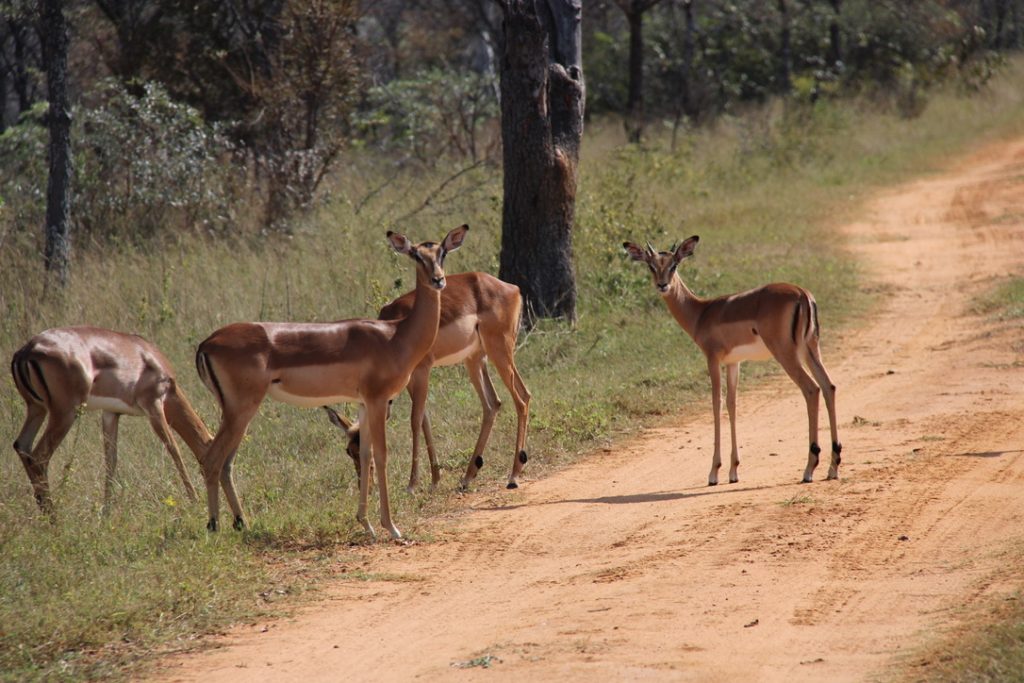
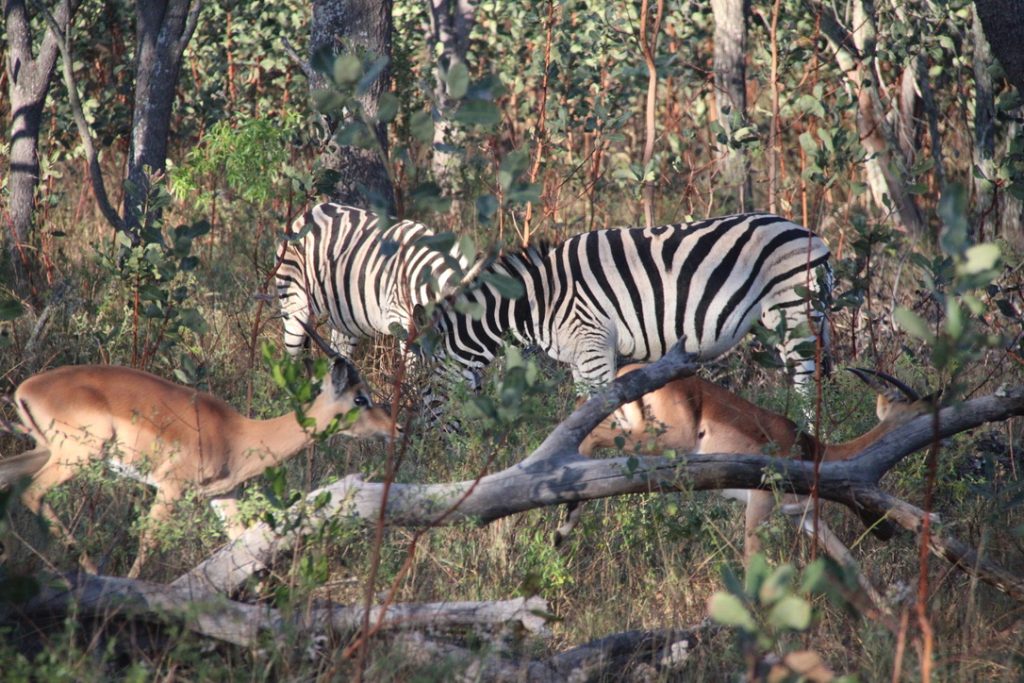
A herd of elephants crossing a road isn’t random. A giraffe staring intently into the distance may be watching something you haven’t noticed yet. Impalas suddenly becoming alert often signal that a predator may be nearby. Every behavior tells a story.
The guides were constantly helping us understand those stories. Instead of simply saying, “There’s a lion,” they would explain why the lion was there, what it was doing, and what might happen next. Sometimes those lessons involved things that nature documentaries tend to gloss over.
On more than one occasion, we witnessed nature in its most basic form. No, I’m not talking about predators hunting prey. It happened to be mating season for some of the animals, and animals do what animals do.
Warthogs. Impalas. Even ostriches. Apparently none of them have ever been told to “get a room.”
Then again, they already had one. It was called Africa. And it was enormous.
The guides explained that mating season can dramatically change animal behavior. Males become more territorial, more aggressive, and considerably less tolerant of competition. If another male wanders too close to a potential mate, things can escalate quickly.
We saw male impalas chasing rivals away from their groups. We watched animals posture, display, and occasionally challenge one another for dominance. The message was usually pretty clear: “This is my territory.” and “That’s my girlfriend.”
While some of the encounters were amusing, they also served as a reminder that we weren’t observing a staged attraction. Some interactions were potential deadly. We were watching animals live their lives exactly as they have for thousands of years.
The guides helped us see that every interaction, whether feeding, resting, defending territory, raising young, or finding a mate. It was part of a larger story unfolding across the bush. And once you start understanding those stories, every animal becomes more interesting.
What Comes Next
By the end of the day, we had learned something important. Safari isn’t about checking animals off a list. It’s about understanding a landscape, reading clues, and appreciating how an entire ecosystem fits together.
Still, let’s be honest. No matter how educational the experience becomes, every safari guest has a little checklist hiding somewhere in the back of their mind.
And there was one challenge we all quietly shared. Could we find the Big Five?
0 Comments