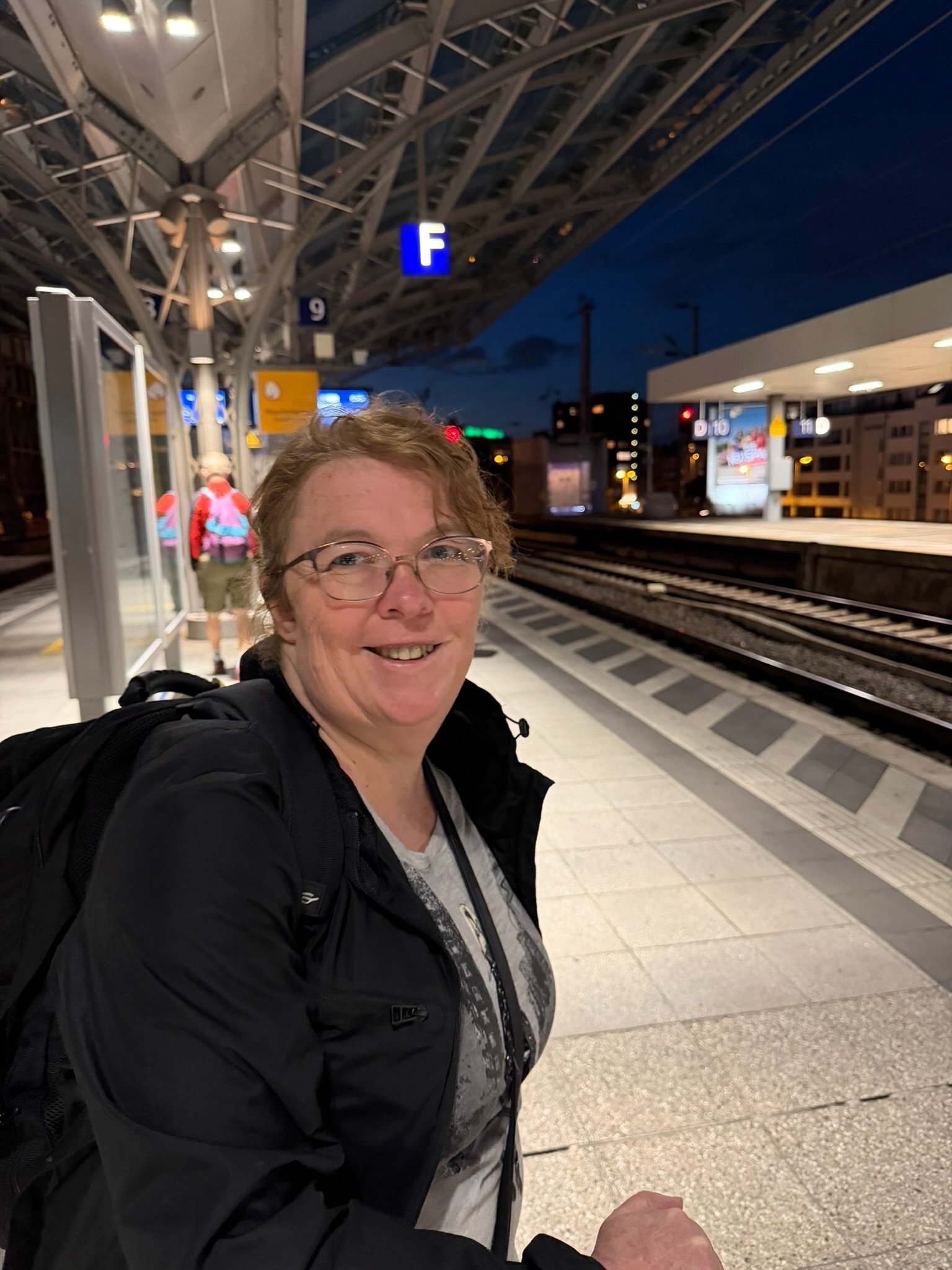
After Disneyland Paris, we headed toward Koblenz, a city at the meeting of the Rhine and Moselle rivers. We had to change trains along the way, and we learned quickly that a connection is only straightforward until the departure platform changes. One of ours did. There was an announcement, but it was in German, and although I can read a little German and recognize some spoken names, I didn't catch the important part. We were waiting on the wrong platform when our train left.
That's when we discovered the value of the printed station schedules. In Germany, the yellow sheets show departures and the white sheets show arrivals. We studied the schedules and found another way toward Koblenz, including a Regional-Express (RE) train. Unfortunately, delays followed delays, another connection slipped away, and we didn't reach Koblenz until after ten at night.
The next morning brought a different receptionist, a much friendlier welcome, and an easy arrangement to leave our luggage behind the desk while we explored. Breakfast was good, the hotel was attractive, and in daylight its riverfront location made much more sense.
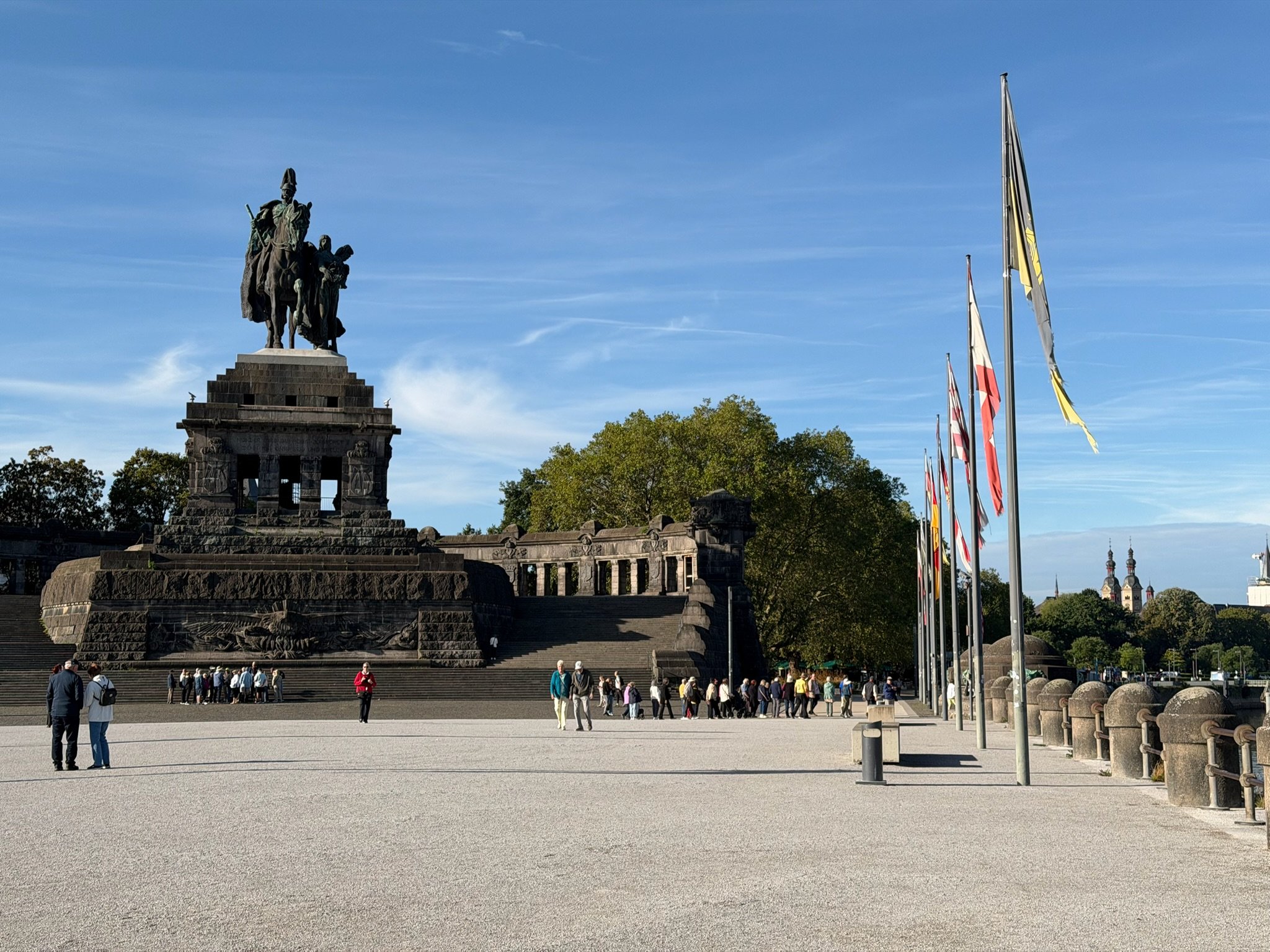
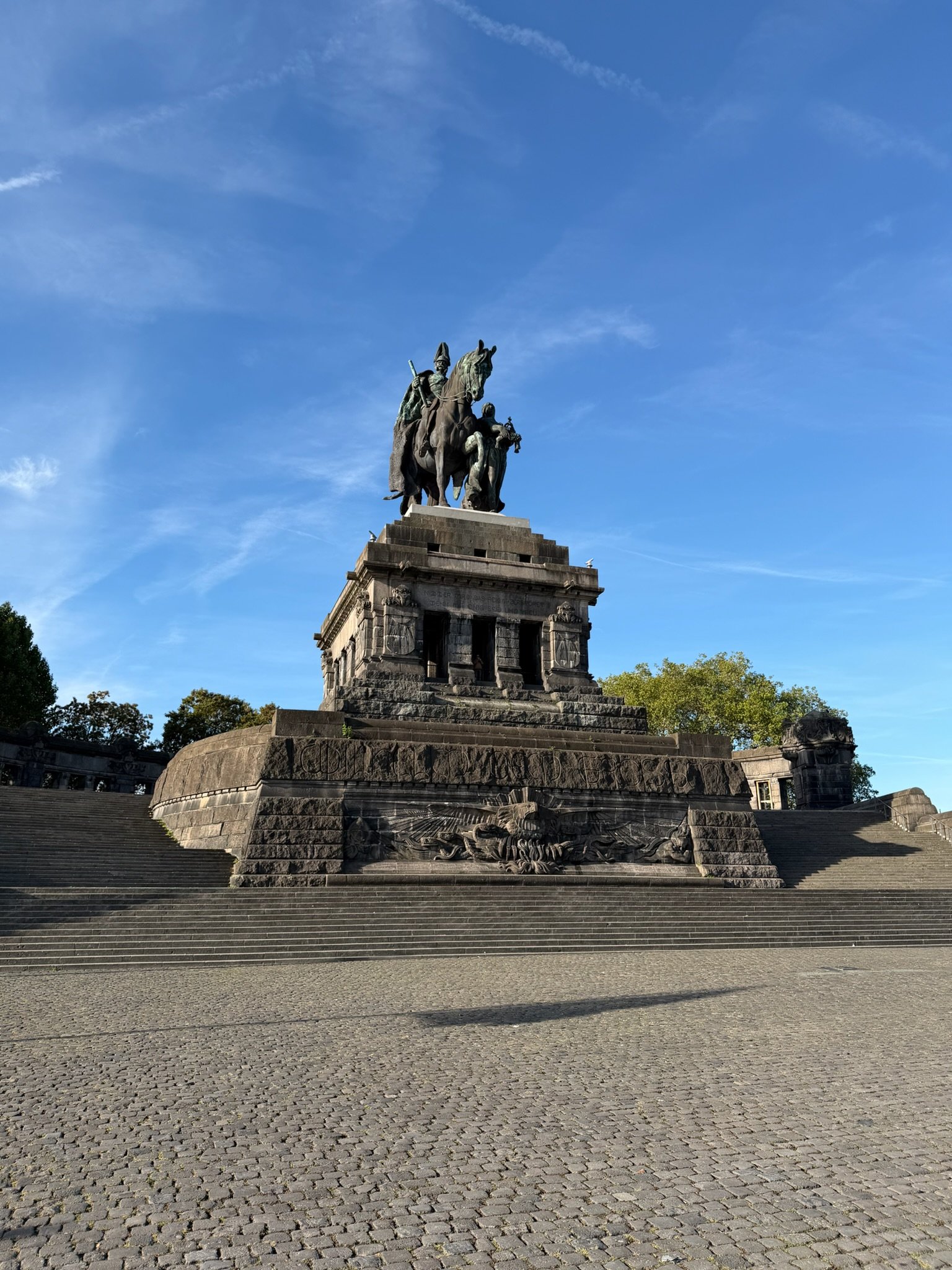
We walked along the water to Deutsches Eck, or German Corner, where the Moselle joins the Rhine. An enormous equestrian monument to Emperor Wilhelm I dominates the site. Wilhelm I became the first emperor of a unified Germany in 1871. The monument was unveiled in 1897, nine years after his death, and stands at the meeting point of the Rhine and Moselle rivers. It was heavily damaged by American artillery fire during World War II, and the original statue was subsequently removed. For decades, the empty pedestal served as a memorial to German unity, particularly during the country's division into East and West Germany. Following reunification in 1990, a reconstructed equestrian statue was installed in 1993, restoring one of Koblenz's most recognizable landmarks. We climbed the accessible parts of the monument, photographed the meeting rivers, and admired the views. We also made a joke about how certain American politicians might react to hearing someone else had such a large statue.
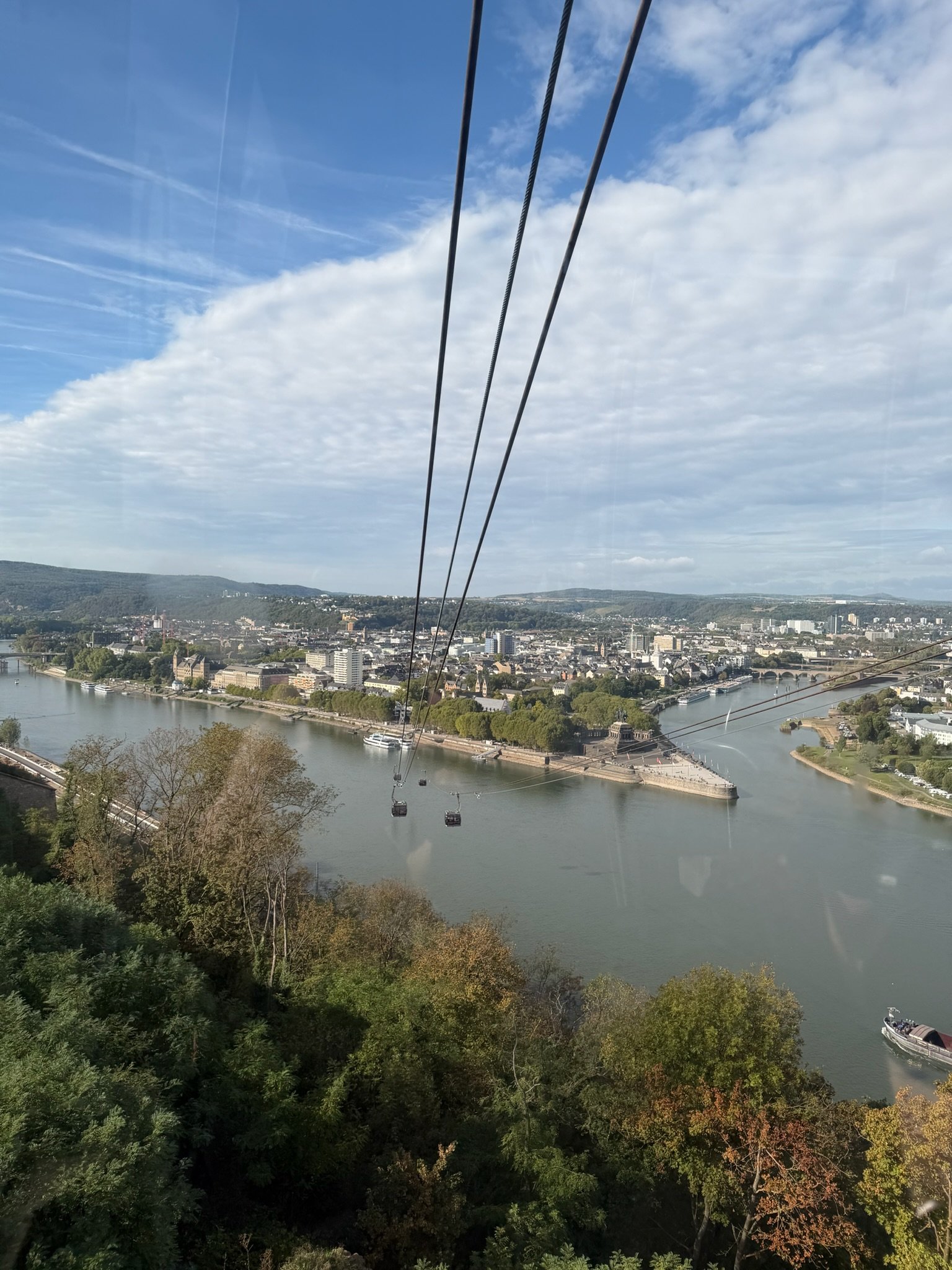
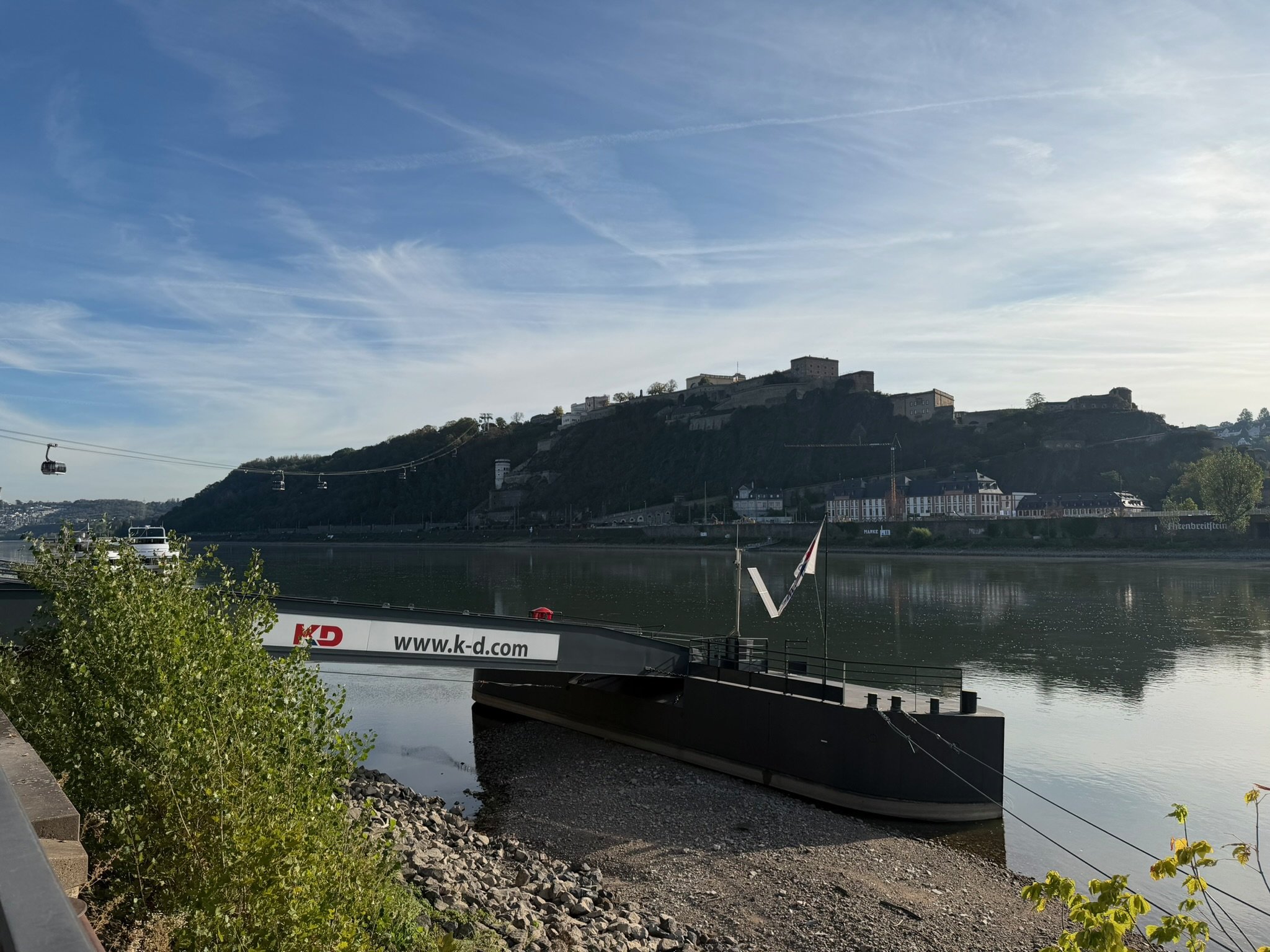
Next we rode the cable car across the Rhine and up to Ehrenbreitstein Fortress. The view from the cable car was wonderful: the river traffic, the city, and the two rivers coming together. And fortress is the right word for the immense defensive complex above Koblenz. This isn't simply a romantic hilltop castle. We walked around, took photographs, and admired the panoramic views, but we couldn't stay as long as we might have liked. We had a boat to catch.
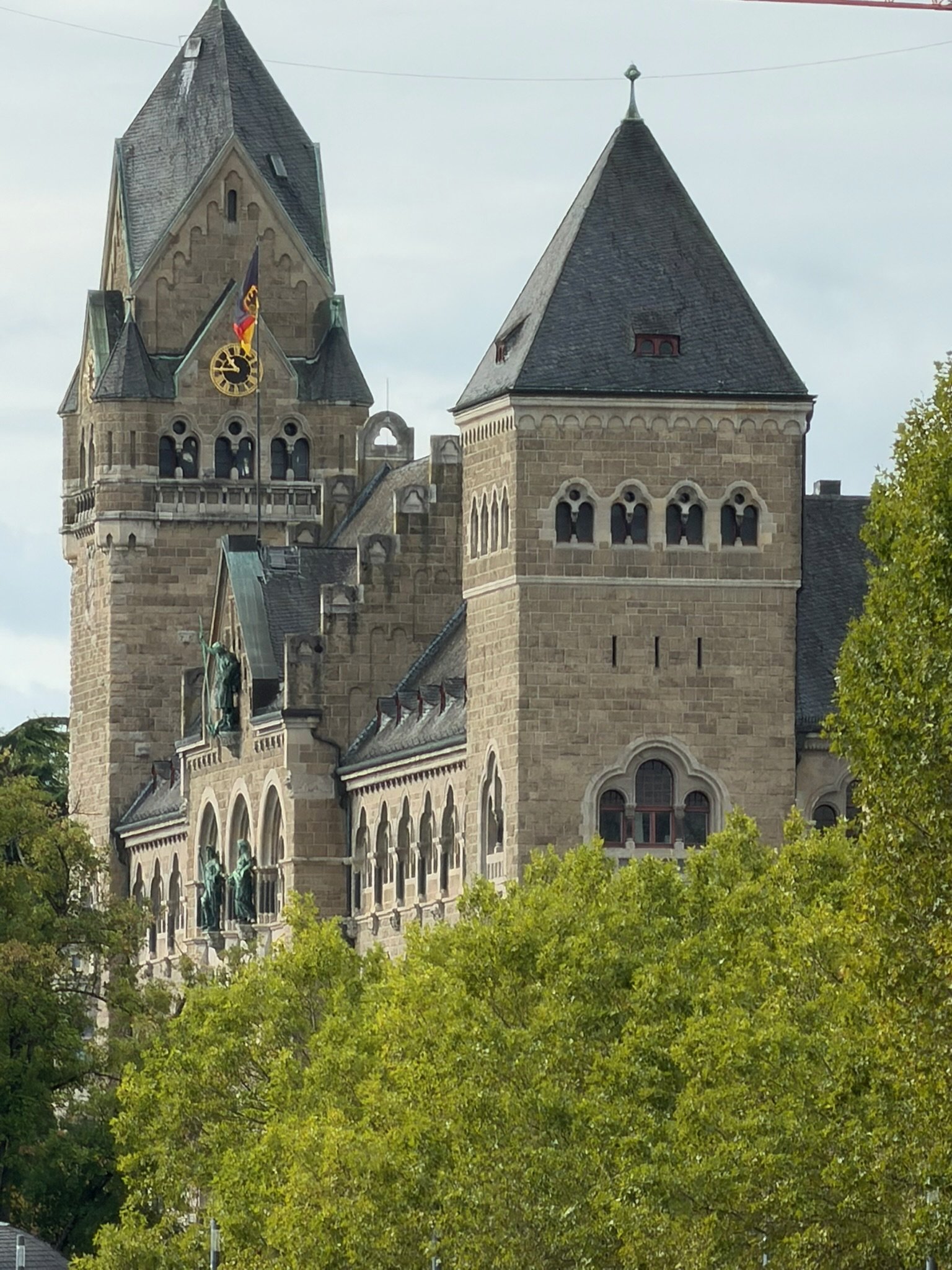
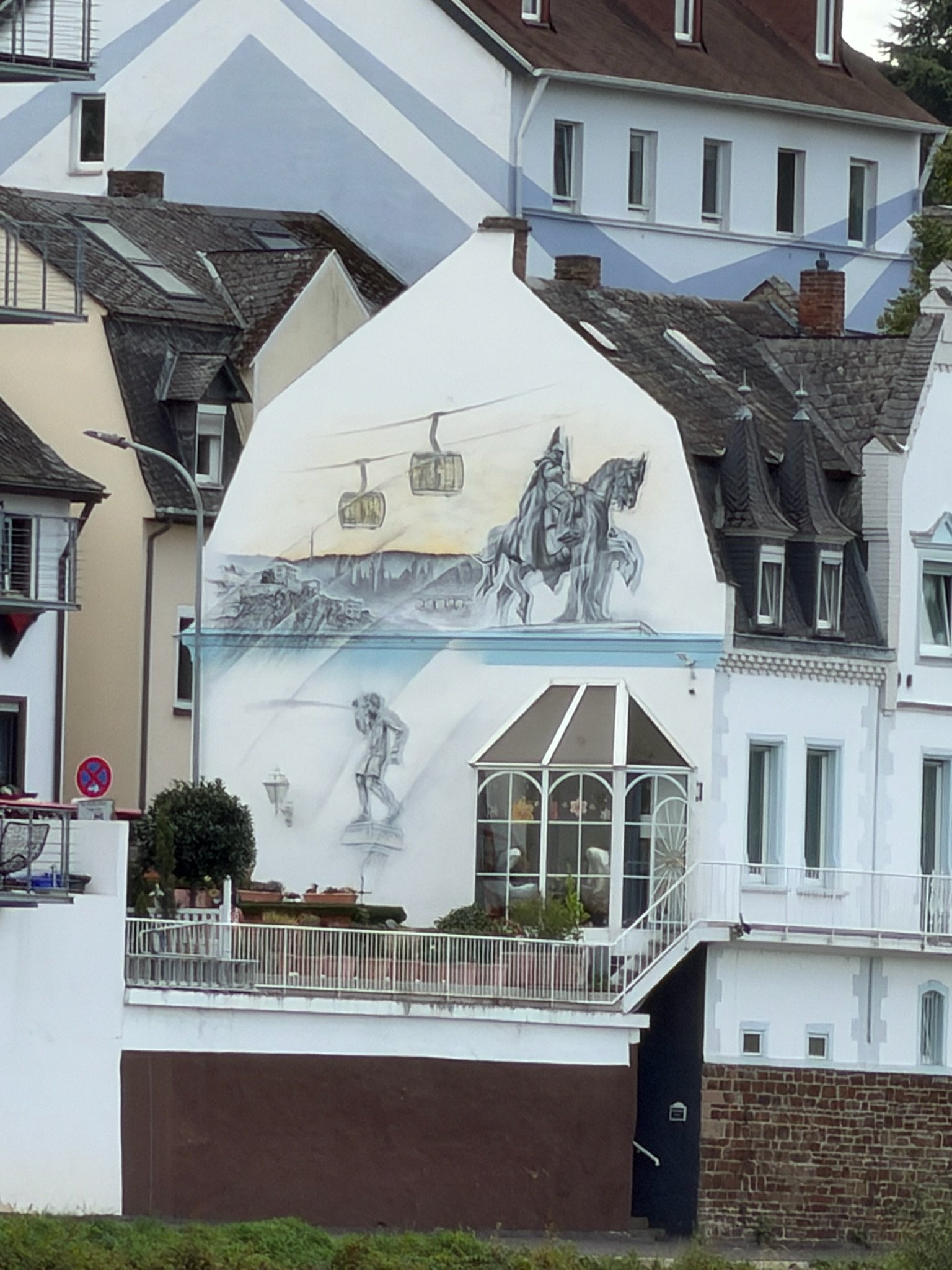
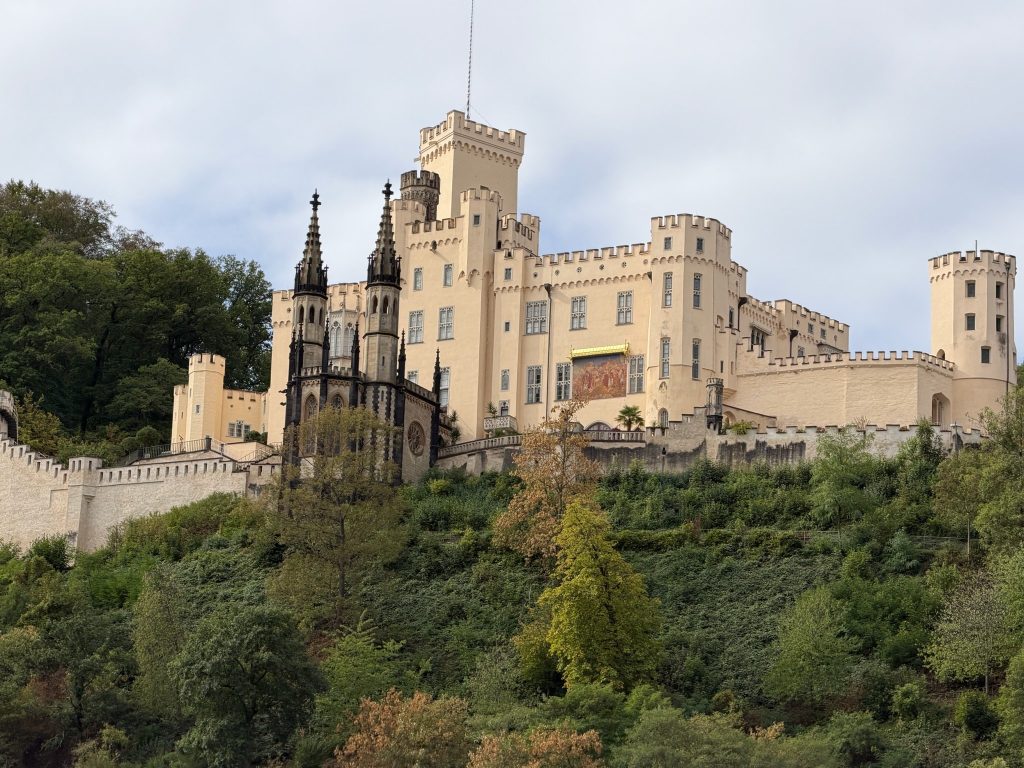
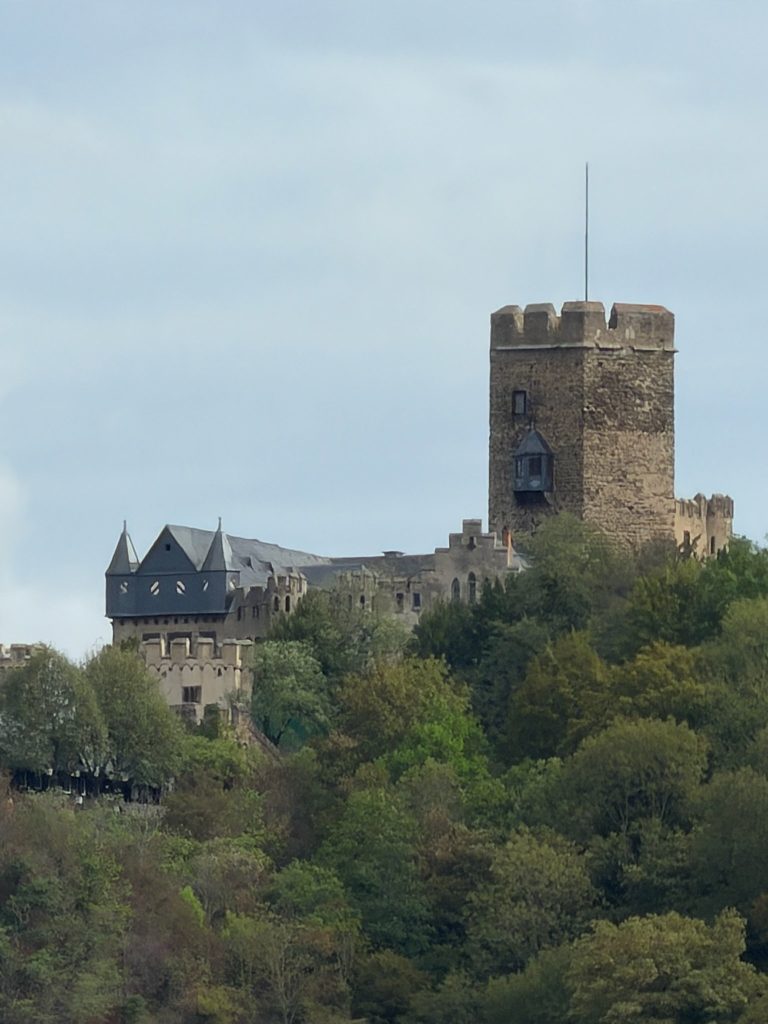
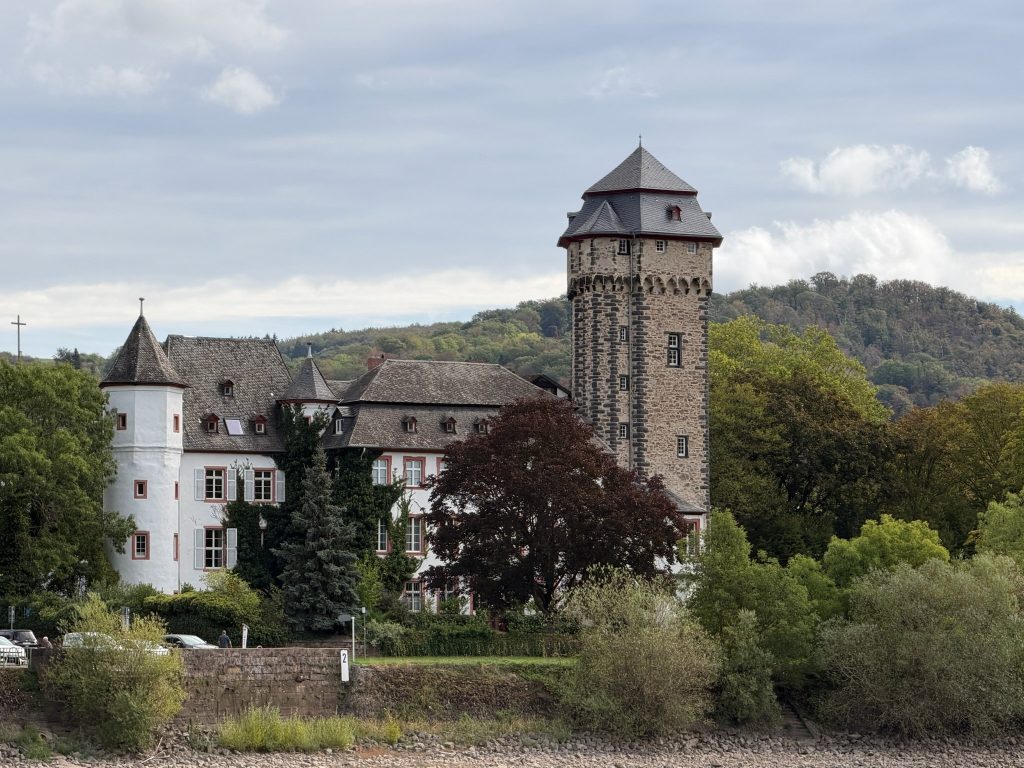
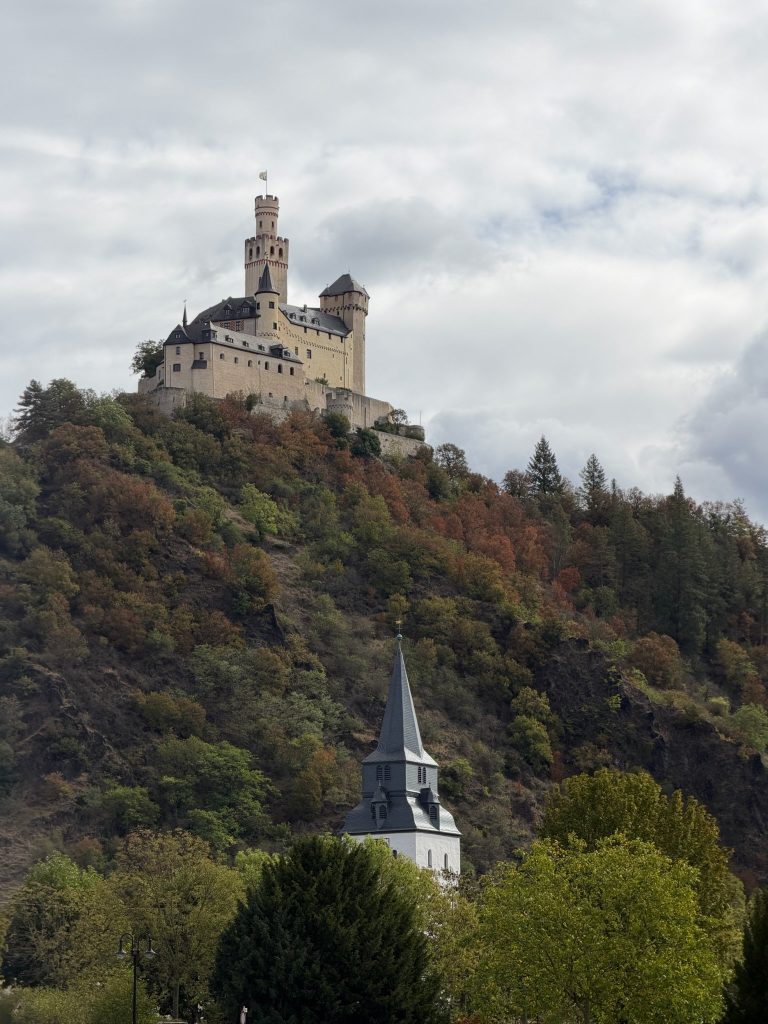
Our river cruise lasted a couple of hours and offered food, drinks, and commentary in German and English. As we traveled, the narration identified castles along the banks and high on the hills. Some of the translations were a little awkward, but the stories came through. The sheer number of castles was striking, each with its own history of families, fortifications, and control of the river.
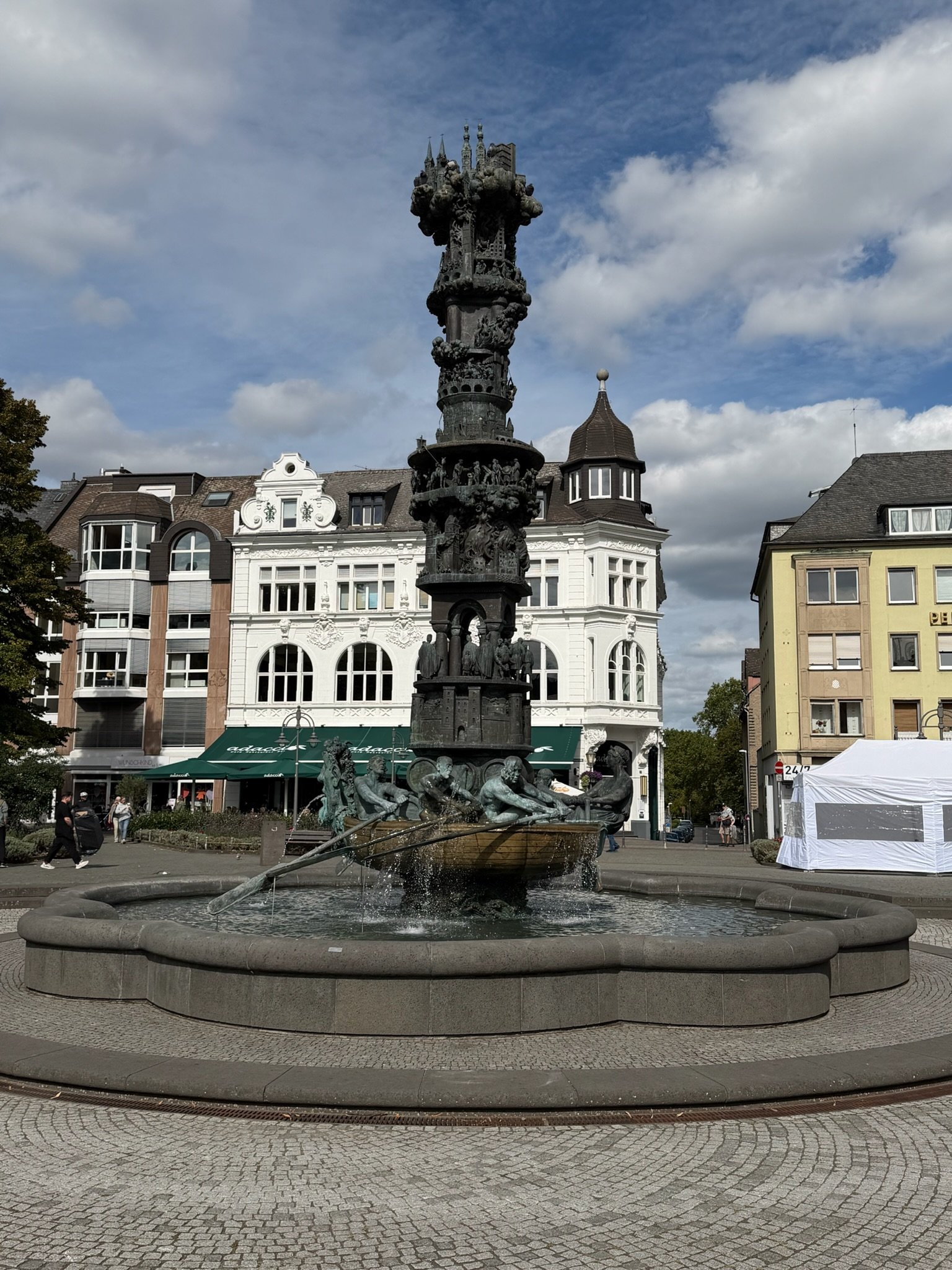
Koblenz illustrates the way we'd planned much of this trip. We weren't going to spend days in every destination. Paris, Heidelberg, and Munich were longer stays, but in other places we wanted a few hours to see the highlights: a fortress, a river cruise, an interesting neighborhood, or a memorable meal. That means accepting that we can't see everything, but it also lets us discover more places along the way.
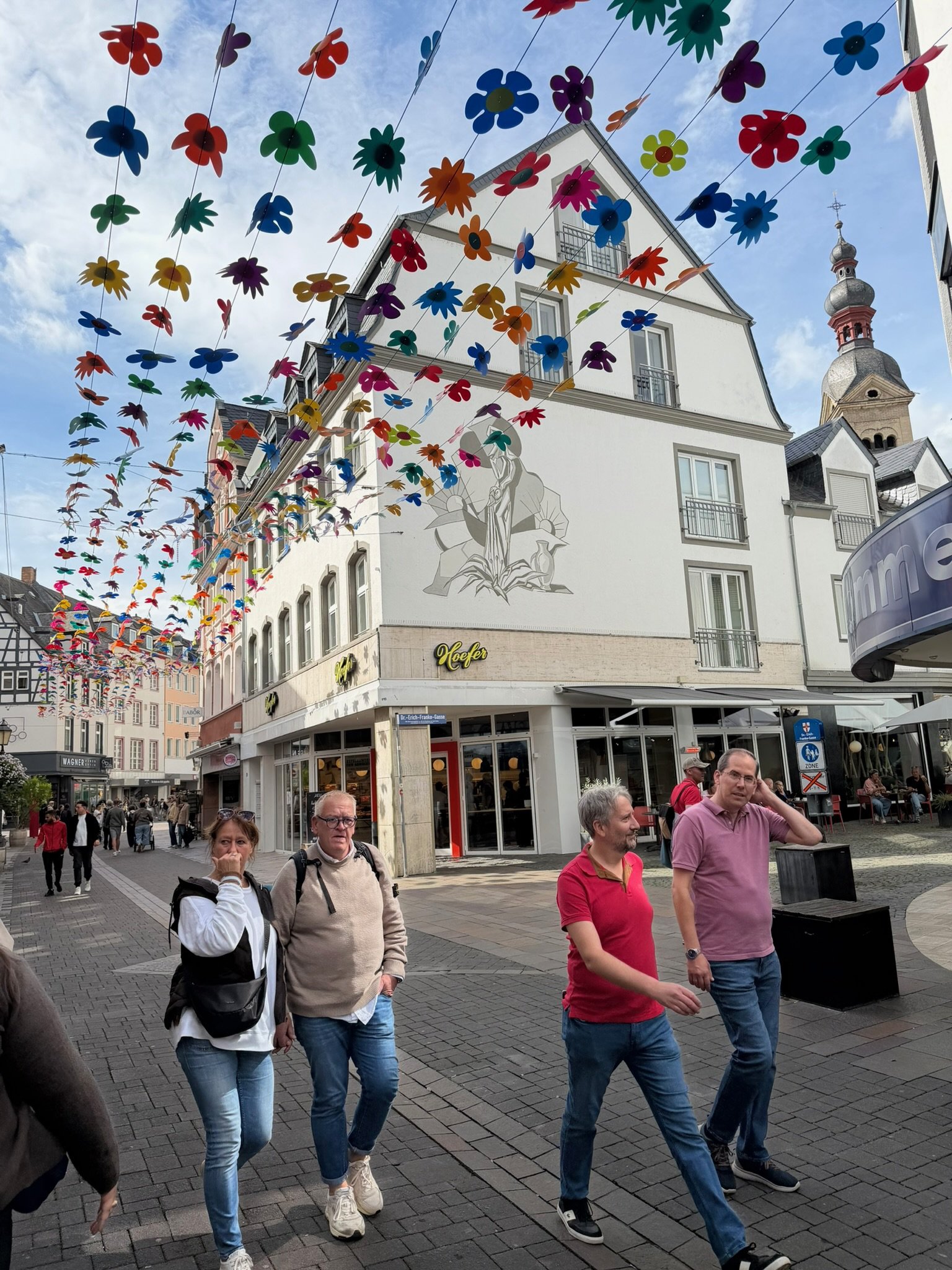
After the cruise, we collected our bags from the hotel and walked back toward the station. In daylight, the pedestrian streets we'd passed the previous night were lively, with open shops and plenty to see. We did a little shopping and stopped for lunch at Trattoria Adria, a restaurant with something of an Italian influence. Its goulash was absolutely divine, and there were vegetarian choices for Teresa.
Then it was back to the train station and onward to Heidelberg. Hopefully, this time, we'd find the correct platform.