
Athens
We get into Athens and then went straight to the Acropolis. The whole hill is called the Acropolis and only the temple is called the Parthenon. This has some interesting facts and also has many

Shortly after our honeymoon, Teresa and I decided that we wanted to do something a little different for our anniversaries. Rather than spending money on gifts for each other, we wanted to spend it on experiences. We wanted to travel, explore places we’d never been, and make memories together. After all, how many anniversary gifts do you remember twenty or thirty years later? But a trip? Those memories can last a lifetime.
Of course, we couldn’t afford to take a major international vacation every year, so we came up with a plan. Every five years, we’d celebrate our anniversary with a big trip outside the United States. We weren’t necessarily giving up the smaller vacations in between, but every fifth anniversary would be something special. And for our first big adventure, we decided on Europe.
There were a few reasons Europe appealed to us. For one, we were somewhat familiar with it, certainly more than we were with places like China or Japan at the time. But there were family connections as well. Teresa’s grandmother was originally from France, and I was born in Germany. My father was stationed there; we left before I turned three, but he was posted to Germany again after his tour in Vietnam, and I was four that time. Those years left fragments of memories that have stayed with me ever since, and I wanted to share them with Teresa. Neither of us felt completely disconnected from Europe, even though there was still an enormous amount we hadn’t seen or experienced. There was something about returning to those roots, even if we weren’t entirely sure what we’d find.
The question was how to see as much of Europe as possible without spending months planning every train, hotel, and border crossing. We were still relatively inexperienced international travelers, and the idea of navigating a dozen unfamiliar countries on our own was a little daunting. Neither of us spoke another language well, either. I’d taken Spanish and Latin in high school, and Teresa had some French, but we were a long way from conversational, and we didn’t want to get stuck somewhere we couldn’t make ourselves understood. Then I found a tour that seemed almost too good to be true: ten countries in twenty-one days, traveling through Europe on a Globus motorcoach.
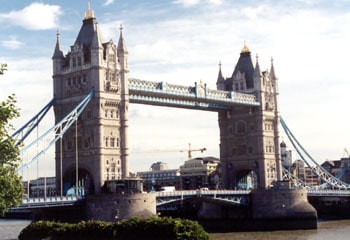 We’d start in London, then on to Paris, Brussels and Amsterdam before turning south into Germany and Switzerland, through tiny Liechtenstein into Austria, down through Italy, and finally across the sea by ferry to Greece. We started planning in 1998, priced it out, got our passports and started saving.
Now, twenty-one days might not sound like enough time to explore ten countries, and frankly, it isn’t if you want to get to know each one in depth. But that wasn’t our goal. We wanted an introduction to Europe, a chance to experience different cultures, see famous landmarks, sample local foods, and perhaps discover places we’d want to return to someday. This trip seemed like a good way to do exactly that.
 One of the advantages of booking a guided tour was that most of the complicated planning was already done for us. Globus arranged the hotels, transportation, and much of the sightseeing. Breakfast was generally included, and the motorcoach would take us from one destination to the next. We didn’t have to figure out how to get from Rome to the next city or worry about whether we’d booked the right hotel in Germany. Someone else had already worked out those details.
Our responsibility was mostly getting to Europe, getting home afterward, and making sure we had enough spending money for everything that wasn’t included. There were optional excursions, meals, souvenirs, and whatever else caught our attention along the way. And with twenty-one days of traveling ahead of us, we made sure we’d arranged enough vacation time to enjoy the trip without having to rush back to work.
One thing that younger travelers might find amusing is that this was before the euro became the common currency across much of Europe. Traveling between countries meant dealing with different currencies, sometimes every day or two. Germany had the deutsche mark, France had the franc, Italy had the lira, and several other countries had their own currencies as well.
Imagine trying to keep track of all that while moving through ten countries in three weeks.
Fortunately, Globus offered something they called a tour wallet. Essentially, we gave them money, and they provided an assortment of local currencies based on the countries we’d be visiting and approximately how long we’d be there. We received marks, francs, lire, and several other denominations, all organized so we’d have the appropriate currency when we needed it.
We checked the exchange rates and found them quite reasonable. The tour company wasn’t trying to make a fortune exchanging our money, and it saved us the hassle of finding a currency exchange every time we crossed a border. It was one less thing to worry about, and on a trip covering that much ground, one less thing was welcome.
This trip also marked the beginning of something else, although I didn’t realize it at the time.
I decided to take a journal along with me. The idea was simple: at the end of each day, I’d write down where we’d been, what we’d seen, who we’d met, and anything else worth remembering. I knew that after twenty-one days and ten countries, the experiences would start running together. Without writing things down, I might remember seeing a particular castle or cathedral but forget which city it was in.
Those handwritten notes would eventually become the foundation for many of the stories you’re about to read. Some were transcribed years later, with additional details added as memories resurfaced. Others still read a little like journal entries, because that’s exactly how they began.
But the journal wasn’t my only experiment.
Teresa’s mother was understandably a little concerned about her daughter spending three weeks traveling around Europe. She wanted to know where we’d be and what we’d be doing. Today, we’d probably share our location from a smartphone, send a few pictures, or post updates on social media. Back then, none of that was particularly practical.
I’d been working with computers for years and had already developed a few websites, although I hadn’t done much actual web programming. So I decided to build something that would let her follow our trip from home.
I wrote a small PHP application that displayed our itinerary based on the date. It wasn’t live tracking, of course. There were no GPS updates, smartphone apps, or webcams following us around. Everything was based on the itinerary Globus had provided.
But it worked.
The website included a map of the countries we’d be visiting, with clickable locations that opened information about the cities and the days we’d be there. If she clicked on Rome, for example, she could see when we were scheduled to arrive, how long we’d be staying, and what activities were planned. I included photographs and descriptions, mostly drawn from the tour information, to give her an idea of what we might be seeing.
At the top of the page, the site displayed our current destination based on the date. Before we left, visitors would see a welcome message and information about the upcoming trip. Once the journey began, the page would automatically change to show where we were supposed to be that day. If it was day four and we were scheduled to be in the Netherlands, that’s what the website displayed.
It was a simple idea, and by today’s standards, the technology was pretty basic. But for me, it was an interesting introduction to dynamic websites, and for Teresa’s mom, it offered a way to follow along without having to wait for us to call home.
Looking back, it’s funny to think that I was building a rudimentary travel website and keeping a handwritten travel journal long before we ever considered starting a travel blog.
So, with our flights arranged, our tour booked, our assortment of European currencies ready, and my journal packed, we set off on our first major international adventure together.
Over the next twenty-one days, we’d visit ten countries, experience cultures we’d previously known mostly through books and television, and discover that there was an enormous difference between seeing a place in a photograph and actually standing there. We’d try unfamiliar foods, meet interesting people, and occasionally find ourselves in situations that weren’t exactly covered in the travel brochure.
Some of the experiences were wonderful. Some were unexpected. And a few would become stories we’d still be telling decades later.
What started as a simple idea to celebrate our fifth anniversary became one of the most memorable trips we’d taken together. It also reinforced something we’d begun to discover on our honeymoon: the things we experienced together were worth far more to us than the gifts we could have bought each other.
Give each other memories, not gifts.
That philosophy would eventually become part of Traveling Tummy, but back then, we were simply two people with three weeks of vacation, a bus ticket through Europe, and a lot of places we wanted to see.
And these are the stories from that trip.
We get into Athens and then went straight to the Acropolis. The whole hill is called the Acropolis and only the temple is called the Parthenon. This has some interesting facts and also has many

This was supposed to be a leisure cruise on the Aegean Sea. Unfortunately, They stuffed us into the boat and we got less than an hour on each of the three islands. Don’t get me

My oh my, 4:30am came too quickly for our trip home. We were smart and packed the night before, so it gave us a little time. Laszlo had said that that there would be some